

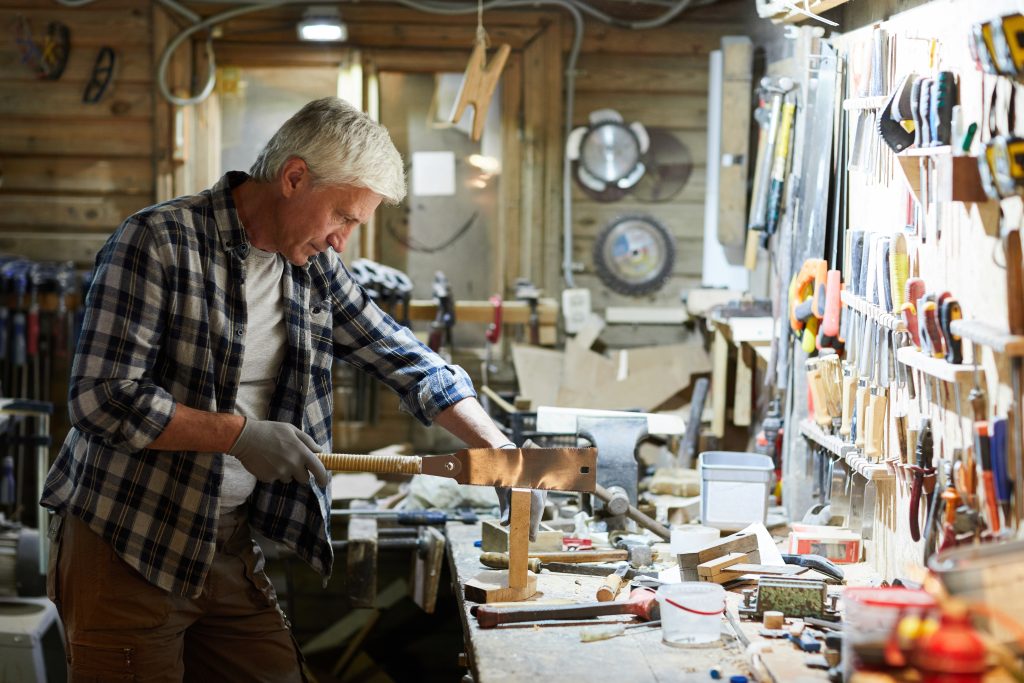
Woodshops are revisiting safety routines with a sharper focus on aging-related risk: reduced grip strength, slower reaction time, vision changes, and balance issues that can turn common tasks ripping stock, carrying sheet goods, stepping around cords into higher-consequence moments
Why it matters
For small shops especially, one preventable injury can mean days of lost production, missed deadlines, medical costs, and higher liability exposure. Falls remain a leading cause of fatal and non-fatal injuries among older adults, and shop environments combine trip hazards, heavy materials, and fast-moving cutters that magnify the consequences of a stumble or a delayed reflex.
What we know
Machine hazards don’t “age out” but human factors change. Core woodworking risks kickback, blade contact, ejection, entanglement stay the same, and OSHA’s woodworking machinery rules emphasize guarding and anti-kickback measures on equipment where applicable. What changes with age is the margin for error: a momentary lapse, slower recovery, or weaker grip can make a near miss more likely to become an injury.
Trips and falls become the quiet risk multiplier. In many shops, the biggest injury risk isn’t the dramatic event it’s the ordinary: a slip on fine dust, a step over a hose, a hurried turn with a board in hand. Public health data shows falls among older adults are widespread and often severe, reinforcing why housekeeping, traction, and clear walkways matter more as the workforce ages.
Noise and hearing loss are often underestimated in one- and two-person shops. OSHA recommends precautions when workplace noise reaches an average of 85 dBA over an eight-hour day, a threshold common around many machines. OSHA similarly notes that exposures over 85 decibels can damage hearing and encourages shops to understand their noise levels. For older woodworkers already managing age-related hearing changes, reduced audibility can affect situational awareness, verbal warnings, and the ability to detect unusual machine sounds early.
Vision changes can alter safety-critical judgment. Research on aging workers highlights common changes such as glare sensitivity and reduced contrast, which can affect safe navigation and precision tasks especially in shops with harsh overhead lighting or low-contrast layouts. In practical terms, that can mean misreading a scale, missing a hairline crack, or not seeing a trip edge until it’s too late.
“Muscle control” issues show up as grip, dexterity, and fatigue, especially later in the day. Aging doesn’t affect everyone the same way, but many shops report the same pattern: fine-motor tasks take longer, holding small parts feels less secure, and fatigue builds faster. The risk is cumulative, small losses in stability and control can add up across repeated cuts, repetitive sanding, and frequent lifting.
What’s next
Workplace safety groups have increasingly framed aging not as a niche issue but as a standard planning assumption adapting work to support “productive aging” and reduce preventable injuries. For woodshops, that often means shifting from informal “common sense” safety to repeatable controls: checklists, lighting standards, housekeeping rules, and machine-condition checks that don’t depend on anyone having a “good day.”
What shops can do now.
- Run a guarding and kickback-control audit across saws and cutters, confirming guards and anti-kickback components are present and functional where required/appropriate.
- Treat slips/trips as a primary hazard: set a daily “clean floor” threshold, remove cords/hoses from walk paths, and standardize clear zones around machines.
- Upgrade visibility: improve task lighting, reduce glare, and increase contrast on steps/edges and tool stations to match aging-vision realities.
- Measure noise and standardize hearing protection when levels are high; if conversation at arm’s length requires raised voices, treat it as a warning sign.
- Reduce manual handling strain: use carts, staging tables, and “no solo lifts” for sheet goods or awkward loads especially late-day when fatigue rises.
- Build a stop-work culture: encourage workers to pause when grip, balance, or coordination feels “off,” and to reassign high-risk tasks when needed.
Sources
- OSHA — 29 CFR 1910.213 Woodworking machinery requirements
- CDC — Older Adult Fall Prevention (key data and context)
- CDC/NIOSH — Noise-Induced Hearing Loss & 85 dBA REL guidance
- OSHA — Occupational Noise Exposure overview
- NIOSH — Productive Aging and Work (aging workforce safety framing)
- Professional Practice (SAGE) — Visual Performance and Occupational Safety Among Aging Workers