It’s not every day that you discover a custom bamboo rod builder that lives down the street! Moving to the Myrtle Beach area, I thought I had gotten about as far away from fly fishing as possible. There’s no coldwater streams, no river shoals, no lakes, there’s not even saltwater grass flats to fish. It’s a wonderful place to sit on the beach, eat some fresh seafood, and play golf, if you’re into that sort of thing. But fly fishing, that’s not a hobby shared by many folks here in the Grand Strand. So you can imagine my surprise when I discovered my neighbor was a custom bamboo rod maker! I contacted the owner of Martin Bamboo Fly Rods, Gregg Jenkins, and asked if I could swing by his house to check out his shop and interview him.

Walking into Gregg Jenkins’ workshop in Conway, South Carolina feels like stepping back into a different era of fly fishing, one where craftsmanship and quality mattered more than convenience and flash. The first thing I noticed wasn’t the rows of bamboo culms stacked neatly along the wall, or the glint of polished ferrules under the shop lights, it was the German Shepherd asleep on a dog bed by the door, thumping his tail once before drifting back into a snore. As I eased past the furry gatekeeper, I was hit with the smell of sawdust and varnish still lingering in the air. Sunlight spills through the windows, glancing off the long workbench lined with tools, vises, clamps, jigs and rod ferrules. The shop was clean, organized, and calm, an extension of the rod maker himself.

Bundles of Tonkin cane lean in the corner, each one waiting its turn to be transformed into a fly rod. “That’s the good stuff,†Gregg says, nodding toward them. “It all starts there.†He knows each culm like a craftsman knows his lumber, he knows where it came from, how it was cured, how it’ll flex when being cast or when a fish eats and bends it deep. The bamboo he uses has traveled to the east coast of South Carolina from the Tonkin region of China. Tonkin is widely regarded as the finest source in the world for bamboo material to make fly rods. From these raw stalks, Gregg builds something that blurs the line between tool and heirloom.
Jenkins’ journey to becoming a bamboo rod maker started far from the quiet banks of South Carolina’s blackwater rivers and sandy Pee Dee region. Born in Albany, New York, Gregg grew up in a small town where eight-man football and construction jobs filled his days. Work took him wherever it needed, eventually settling him down here in the South. Here he spent years building and working rather than fishing. That all changed after a trip out West. “We went to Montana for work and ended up fishing the Little Bighorn,†he recalls. “That’s where it got me, hooked on fly fishing ever since.â€

In 2014, Gregg and his wife moved to Conway. Around that time, he found himself with two old bamboo rods that were in bad shape, cracked, delaminated, and too sentimental to throw away. He didn’t know how to fix them, so he set out to learn. That led him to Blue Ridge, Georgia, where he enrolled in one of Bill Oyster’s legendary bamboo rod-making classes. “That’s where I caught the bug,†he says with a grin. “One class, and I knew I’d be doing this for a long time.â€
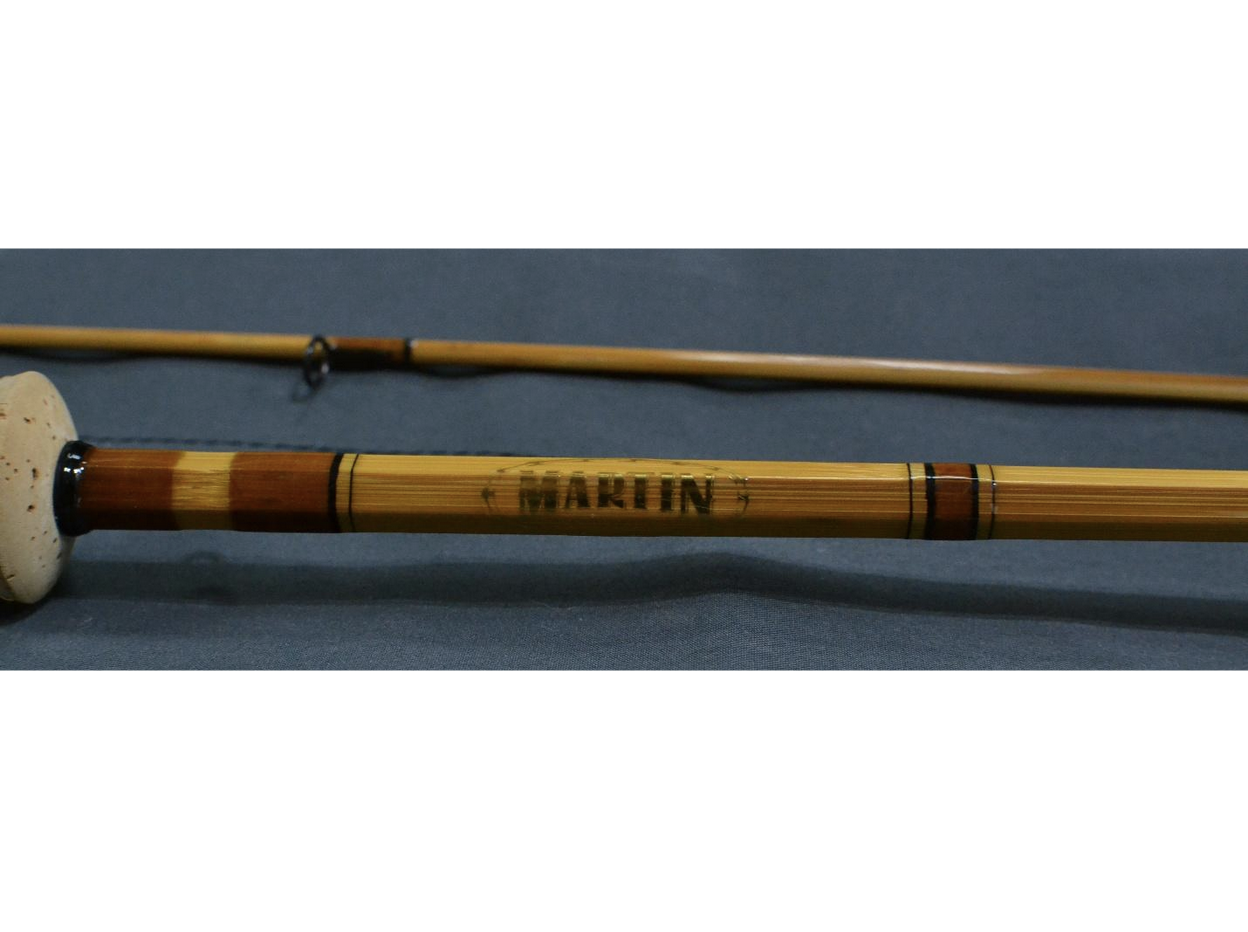
Now, under the name Martin Bamboo Fly Rods, Gregg crafts just one or two rods a year, each one an exercise in patience and precision. Every strip of bamboo is hand-planed, the nodes carefully staggered for strength, and each wrap of silk thread laid down with care. “You’ve got to respect the process,†he says. “Bamboo doesn’t like to be rushed.â€

He’s quick to admit he doesn’t consider himself a great fisherman. “I’m a terrible fisherman, terrible caster,†he laughs, “but everyone who’s ever had one of my rods has loved it.†That humility says a lot about his approach. His focus isn’t on perfection, it’s on crafting a beautiful tool, made to fish.
Gregg’s rods carry a quiet confidence. The tapers are smooth and deliberate, casting with that unmistakable slow rhythm that only bamboo can offer. Compared to modern graphite or even fiberglass, they feel alive in the hand of the caster. He encourages anglers to “overline my rods, bump the line weight up a size, then you can really feel them loadâ€. Most of his builds are traditional two or three-piece rods, though he’s experimented with a special four-piece seven-weight for traveling anglers. And while bamboo can be heavier, Gregg sees that as part of its soul: “You’re not just casting line,you’re casting tradition.â€

Each rod tells its own story. Some he keeps blonde, letting the natural tone of the cane shine through. Others he flames to a dark, rich brown, or even mixes the two into what he calls a “tiger rod,†streaked with alternating shades of light and dark, it’s exciting to the touch. The aesthetics are matched by function, strong, durable, and built to be fished, not just admired.
It’s not all about the rods, though. Gregg’s shop feels like a living room for stories. Photos of rivers and fish, family and friends, and good dogs, hang on the walls of the rod shed. There are even a few pictures of his rods being shown at SEWE (the Southeastern Wildlife Exposition) where he sold his first four rods. “Next year I sold zero,†he laughs, remembering the highs and lows of trying to sell handcrafted rods at a large expo. “But that’s alright. I’m not in it for the numbers.â€

As we chat, his dogs, Mack and Rubi, wander through the shop. Between their naps, they keep him company as he wraps guides and glues grips, and occasionally request the ball be thrown across the shop or out into the yard for their entertainment. On a good day, you’ll find Gregg sanding a cork grip or splitting bamboo for the next section of rod, with the faint hum of a radio in the background. On a great day, he’s standing knee-deep in the water of the neighborhood pond, casting one of his own rods, this is where he finds peace.

In an age when most anglers can order a fly rod with one click, it’s refreshing to meet someone who still builds them one strip at a time. Gregg Jenkins’ Martin Bamboo Fly Rods are more than just quality pieces of gear, they’re a quiet reminder of what craftsmanship looks like. These rods are as much a piece of art as they are a fishing tool – “don’t be afraid,†Gregg remarks as I cast a 7-weight rod he made last spring, “my rods are made to be fished.†That’s easier said than done when you’re holding a piece of art in your hands.


In His Words
I love these quotes from our conversation –
- On Craftsmanship: “You’ve got to respect the process. Bamboo doesn’t like to be rushed.â€
- On fly fishing and casting: “I’m a terrible fisherman, terrible caster… but everyone who’s ever had one of my rods has loved it.â€
- On his start in rod building: “I took a class in Blue Ridge, Georgia, just trying to fix two old bamboo rods that were falling apart. One class with Bill Oyster and I was hooked.â€
- On what bamboo means to him: “You’re not just casting line, you’re casting tradition.â€

If you are the copyright owner and wish to request removal, please contact: info@woodworkersnews.com.