
Projected Expansion of the Wood Adhesives Market by 2030
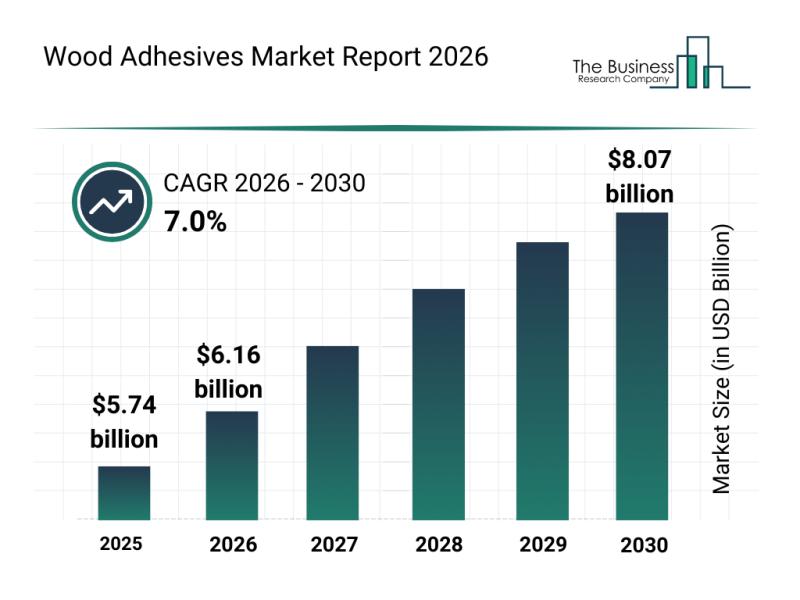
The wood adhesives market is forecasted to reach a value of $8.07 billion by 2030, growing at a steady compound annual growth rate (CAGR) of 7.0%. This anticipated increase is fueled by several factors, such as the growing use of sustainable building materials, a rise in residential construction projects, improvements in adhesive formulas, tighter regulations on emissions, and the growth of modular construction techniques. Important trends set to shape the market over the coming years include heightened demand for engineered wood products, a shift toward bio-based adhesives, broader applications in furniture manufacturing, and a stronger emphasis on low-emission adhesive solutions within construction.
Leading Companies Influencing the Wood Adhesives Sector
The wood adhesives industry features several prominent players driving innovation and market expansion. These include The Dow Chemical Company, 3M Company, BASF SE, Henkel AG & Co. KGaA, Arkema S.A., AkzoNobel N.V., Sika AG, ITW Devcon Inc., Bostik SA, Aica Kogyo Company Limited, Huntsman Corporation, and Jowat SE. Other notable companies are Pidilite Industries Ltd., LORD Corporation, Jubilant Industries Ltd., Beardow Adams Ltd., Chemence Inc., AJ Adhesives Inc., W.F. Taylor, Surebonder, Permabond LLC, L.D. Davis Industries Inc., RPM International Inc., Master Bond Inc., Cattie Adhesives, Collano Adhesives AG, DAP Products Inc., Franklin Adhesives & Polymers, Ashland Global Holdings Inc., Chemique Adhesives Inc., and Eastman Chemical Company.
Significant Acquisition Enhances Market Reach and Capabilities
In September 2023, H.B. Fuller Company, a global adhesives manufacturer based in the US, expanded its European footprint by acquiring Sanglier Limited, a UK-based independent producer of sprayable industrial adhesives. This acquisition broadened H.B. Fuller’s product offerings and strengthened its position in construction and engineering adhesives, including formulations widely used in wood-panel production and furniture manufacturing. The move enhances H.B. Fuller’s capacity to serve wood bonding applications across Europe.
Strategic Focus on Sustainability and Innovation in Wood Adhesives
Leading firms in the wood adhesives market are channeling investments toward enhancing product sustainability and performance to meet growing environmental requirements and customer preferences. Emphasis is placed on developing advanced adhesive technologies such as bio-based and formaldehyde-free formulations that comply with stricter emission standards. For example, in May 2023, Henkel inaugurated a new Technology Center in Bridgewater, New Jersey, dedicated to collaboration and innovation in adhesives, sealants, and coatings. This initiative supports Henkel’s strategy to foster growth in the wood adhesives market by leveraging cutting-edge technologies and sustainable solutions.
Segmentation Insights Highlighting Market Structure
This report classifies the wood adhesives market into several key segments for a comprehensive understanding:
1) Product Types including Urea-Formaldehyde, Melamine Urea-Formaldehyde, Phenol-Formaldehyde, Isocyanates, Polyurethane, Polyvinyl Acetate, Soy-Based adhesives, and other varieties.
2) Technologies used such as Solvent-Based, Water-Based, and other adhesive technologies.
3) Resin categories divided into Natural and Synthetic types.
4) Application areas covering Flooring and Decks, Plywood, Furniture, Cabinet, Windows and Doors, and other uses.
Further breakdowns cover sub-products such as Liquid and Powdered forms of Urea-Formaldehyde and Melamine Urea-Formaldehyde, Aromatic and Aliphatic Isocyanates, Flexible and Rigid Polyurethane, Emulsion and Solvent-Based Polyvinyl Acetate, Soy Protein and Soy Flour-Based adhesives, as well as Casein-Based, Animal-Based, and other Bio-Based adhesives.
Market Outlook by Region and Application
The wood adhesives market is poised to benefit from rising construction activities and increasing adoption in furniture manufacturing globally. The emphasis on eco-friendly products and innovation in adhesive technologies signals strong opportunities for growth across different applications, meeting diverse industry demands while complying with environmental standards.