

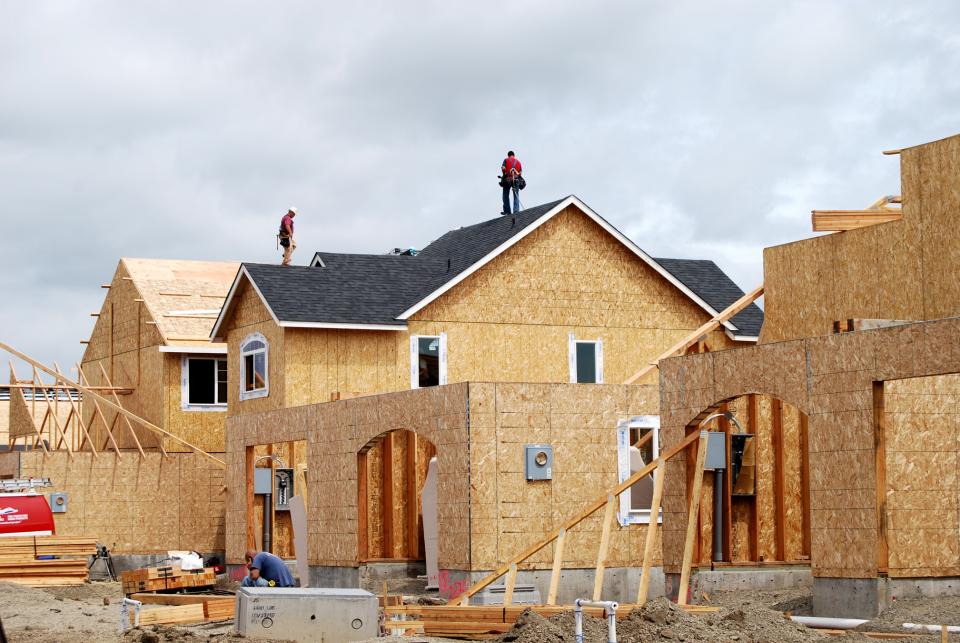
WASHINGTON, DC — U.S. Senators Jacky Rosen (D-NV) and Chris Coons (D-DE) introduced a bill to exclude homebuilding materials from Donald Trump’s tariffs that the senators say will help lower home construction costs.
The Housing Tariff Exclusion Act would automatically exempt many homebuilding materials from Trump’s current and future tariffs and allow importers to apply for tariff exemptions on homebuilding materials that aren’t automatically exempted.
Following the Supreme Court’s decision declaring many of Trump’s broad, cost-raising tariffs illegal, Trump doubled down and implemented a new 10% tariff on global imports, including critical homebuilding materials, which could make it more expensive to build new housing and address the shortage of affordable units in Nevada.
“The shortage of housing that Nevadans can afford is squeezing hardworking families’ budgets. We know that one way to address the affordable housing crisis is by making it easier and cheaper for developers to build more housing – but Trump has done the complete opposite over the past year by imposing cost-raising tariffs on virtually all homebuilding materials,” said Senator Rosen. “The Supreme Court found many of his tariffs illegal, but it’s clear that he’ll use the many other tariff authorities at his disposal to continue imposing them on Nevadans. That’s why I’m introducing this bill to exempt homebuilding materials from Trump’s additional taxes and prevent him from making the housing crisis even worse.”
“President Trump’s tariffs are making it more expensive to build homes in America, and it’s driving up the cost of housing for everyone,” said Senator Coons. “In a housing crisis, this is the last thing we should be doing. The Housing Tariff Exclusion Act will bring home building costs down so more Americans can afford the dream of homeownership.”
The National Association of Home Builders, which supports the bill, pointed to several key provisions:
- Requires the Secretary of Commerce to establish a process for U.S. businesses to request an exclusion from tariffs for goods used in home construction.
- Includes a list of products commonly used in home building for which the Secretary must exclude tariffs within 15 days of application.
- Stipulates that for all other products used in home building, the Secretary of Commerce must administer an objective process and exclude tariffs that would increase the cost of home building in the United States.
- Applies to all tariffs except anti-dumping and safeguard tariffs.
- Allows businesses to apply for reimbursement of tariffs paid prior to an exclusion being granted.
“Roughly 60% of builders have already seen cost increases due to tariffs, which means higher housing costs for American home buyers and renters,” said NAHB Chairman Bill Owens. “This bill is an important step forward to create more certainty for American businesses and to address the nation’s housing affordability challenges.”
With the nation facing a housing shortfall of roughly 1.2 million units, NAHB continues to urge the president to exempt building materials as part of his tariff strategy because they raise construction costs, impede supply chains, and result in market and business uncertainty that make it difficult for builders to price their homes.
A number of other industry groups expressed their support for the bill.
“The National Lumber and Building Material Dealers Association (NLBMDA) is proud to support the Housing Tariff Exclusion Act. Lumber and building material dealers operate within a supply chain that depends on stable and predictable trade policy,” said Jonathan M. Paine, CAE, President & CEO of the National Lumber and Building Material Dealers Association. “Tariffs on essential construction inputs have been shown to increase costs, create market volatility, and can delay or discourage new housing starts. By establishing a transparent and timely exclusion process for critical homebuilding materials, the Housing Tariff Exclusion Act will help stabilize prices, strengthen supply chains, and support the increased construction activity needed to improve housing affordability nationwide.”
The Housing Tariff Exclusion Act was crafted with direct input from NLBMDA and includes exemptions for engineered wood products, lumber, cement and aggregates, stone and concrete products, ceramic tile, glass and glazing materials, insulation, plastics, adhesives, and other inputs essential to residential construction. Additionally, the bill directs the Secretary of Commerce to establish an expedited exclusion process allowing U.S. entities to petition for tariff relief on homebuilding products, with decisions issued within 15 days for critical materials and 60 days for other covered articles.
In the NLBMDA 2025 trade survey, 84.6 percent of the more than one hundred dealers surveyed expressed moderate to high concern regarding ongoing volatility in the marketplace due to the enactment and revision of tariffs throughout the past year. Nearly three-quarters of dealers surveyed stated that tariffs have had a direct impact on their business, requiring short and long-term operational adjustments.
If you are the copyright owner and wish to request removal, please contact: info@woodworkersnews.com.