
Krug started cutting sheet rock, pumping water from ditches for an excavator, and removing water-damaged debris from businesses and homes as a laborer helping his community. After a custom carpenter needed an extra pair of hands, Krug was at the top of his list to ask.
“I was always pushing myself to learn,” Krug says. “I started off consuming a bunch of YouTube videos and stuff like that because I wanted to know more about the business I was getting involved in.” In 2018, Krug began working with a local custom cabinetry business. There, he met Rob Barone.
Krug and Barone hit it off really well, eventually starting their own woodworking shop, Greene Street Joinery, in 2019.
In 2022, the shop was awarded a Green Business Award from Middletown, New Jersey, for “operating in an environmentally-friendly way by choosing lumber that is native and sustainably harvested, using chemical-free finishes, and making pieces that are multigenerational and can be used for decades.”
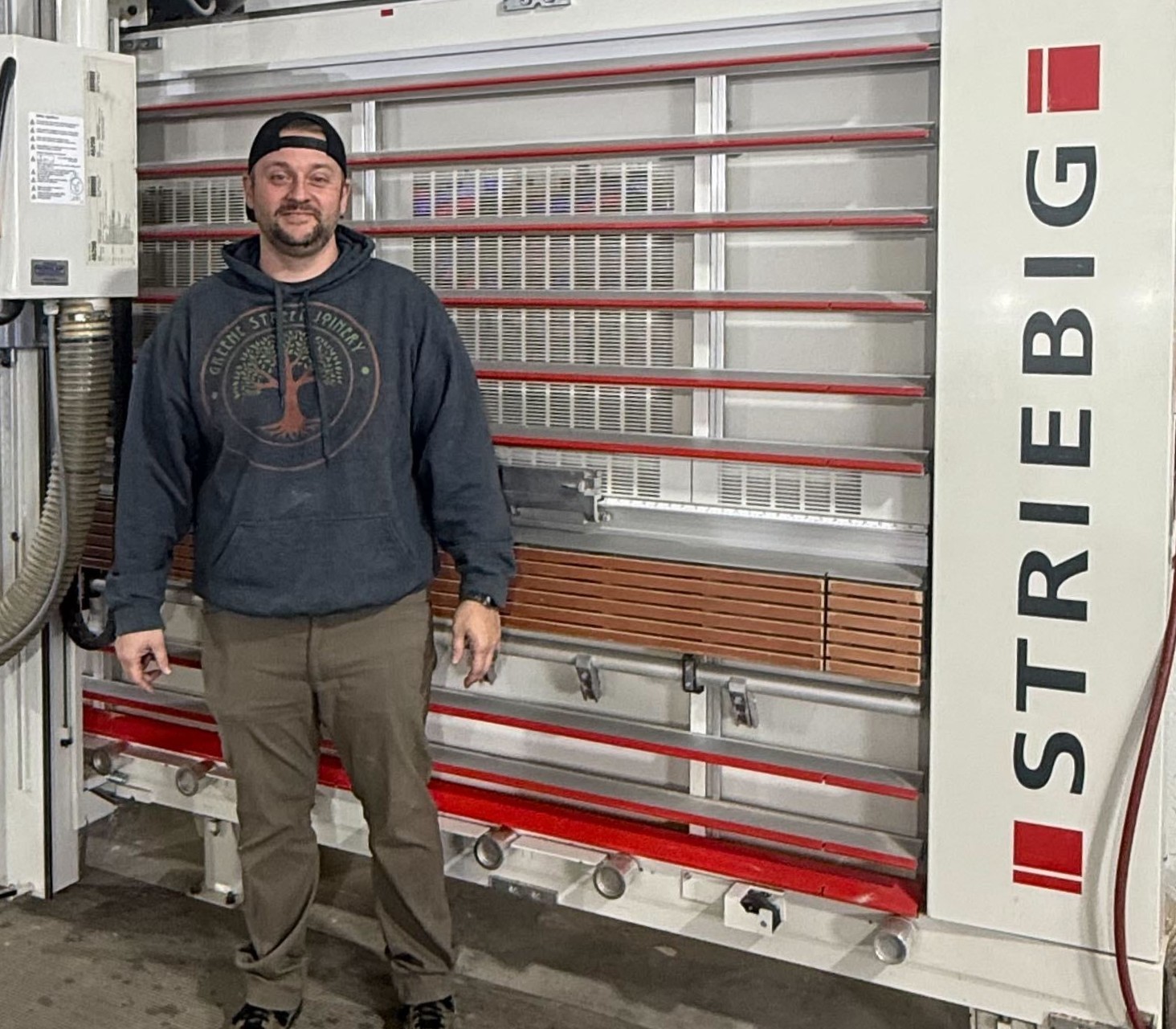
In October 2023, Colonial Saw delivered and installed a Striebig 5 x 10 Compact vertical panel after winning a giveaway. After the win, the company stated on its Instagram: “It has already made such a difference in our day-to-day work. We’re so grateful and excited.” Krug said, in 2025, the company still use it in almost every project. “It really changed a lot in the shop, especially our precision with built-in cabinetry and custom orders.”
Krug also earned a place on Woodworking Network’s 40 Under 40 class of 2025. From volunteer work, sustainability practices, and being a leader in his community, nominators of Krug stated he and Greene Street Joinery are a stand-out business in Keansburg, New Jersey, and the surrounding area.
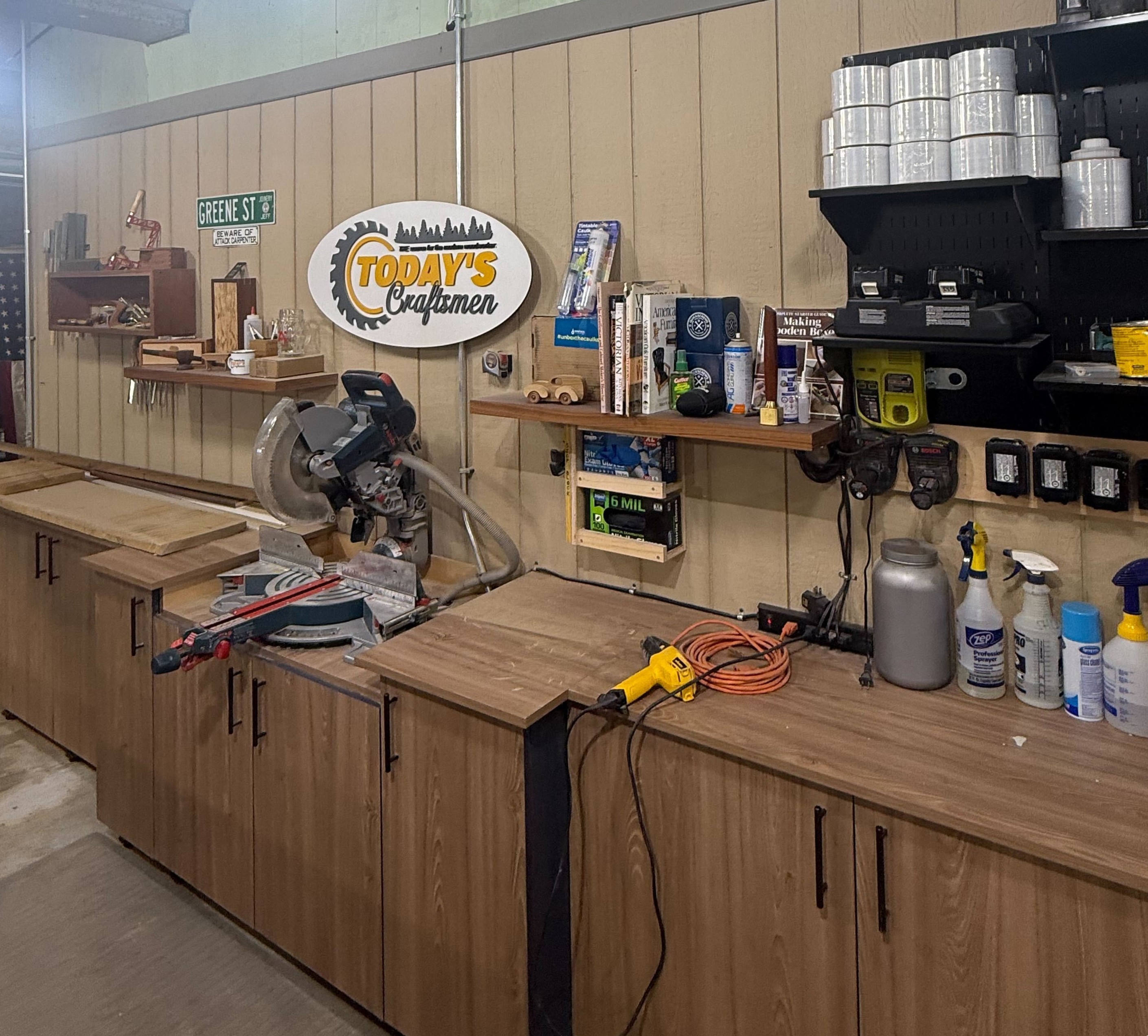
Today, Greene Street Joinery now operates out of a 5,000-square-foot workshop, a space that balances a hands-on studio with the capability of a modern production shop.
The shop’s hardware and software is equipped to handle both custom residential projects and detailed boutique commercial work, such as a Holz-Her CNC, a Cehisa Compact edgebander, and Mozaik software. “The Striebrig, plus those three and a screw gun is pretty much what we need to operate,” Krug says.
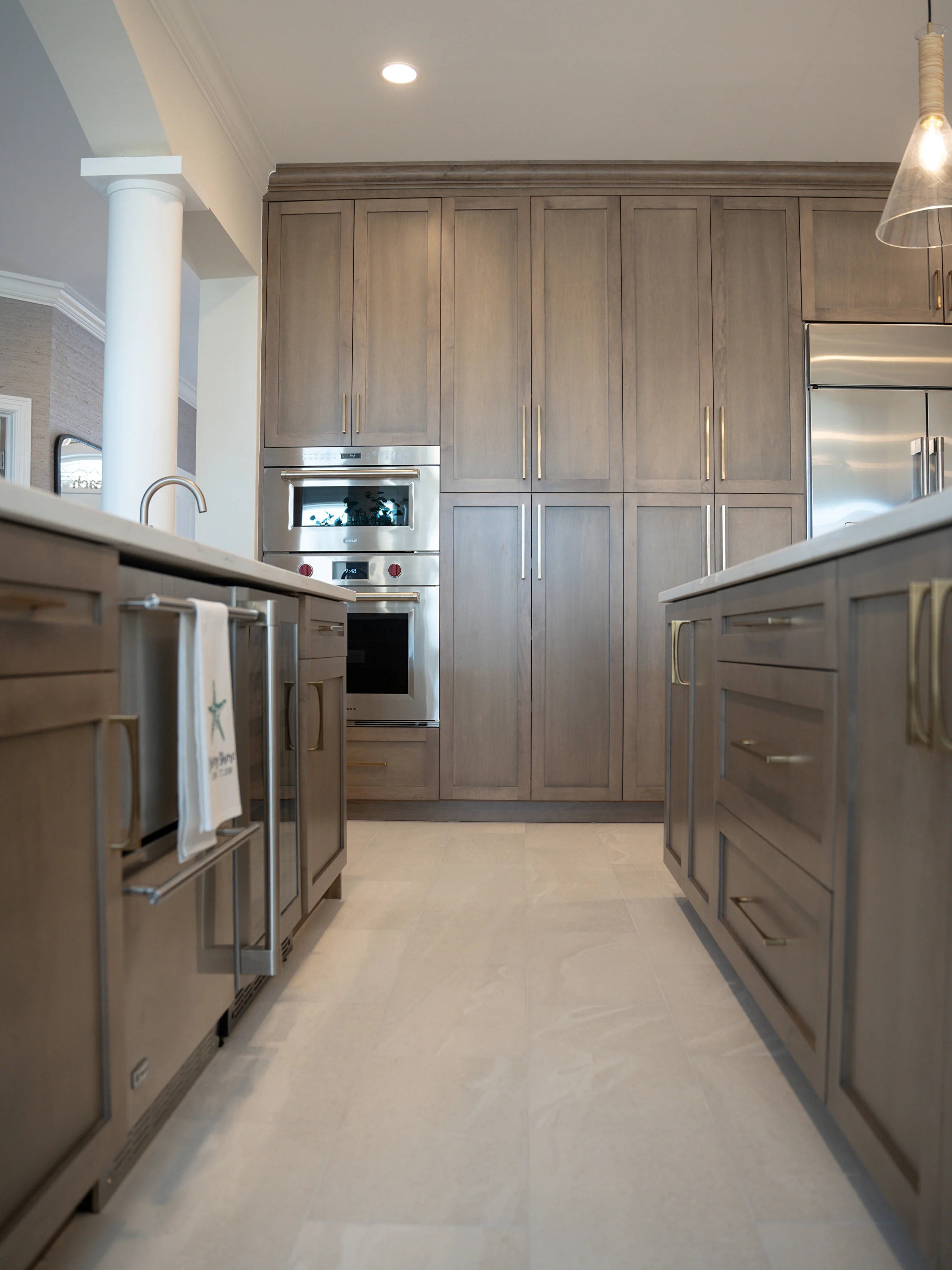
Clients come with everything from vague ideas to detailed architectural plans, and the team adapts accordingly. Their projects often favor clean, modern lines paired with warm hardwoods; walnut, white oak, and maple being the most common choices.
“People want pieces that feel crafted, not manufactured,” he said, adding that the shop’s design philosophy centers on subtlety, proportion, and longevity. “When we started, we scoffed at the idea of having a CNC. I see it differently now. Being able to automate and build things faster, being able to build more accurately, enables us to be more competitive in terms of price and opens up our services to more people.”
The approach has paid off. Much of Greene Street Joinery’s work comes from repeat clients and referrals, something Krug attributes to transparency and consistency.
Even with a well-equipped shop, Krug is already thinking several steps ahead. When asked what features he’d like to add next, his answer was immediate: a flat-line finishing system. “The next thing I would love to add is a flat-line finishing system,” he said, noting that such an upgrade would significantly streamline one of the most time-consuming aspects of custom cabinetry. A flat-line system would allow the team to finish components more efficiently, improve consistency, and increase output without compromising quality.
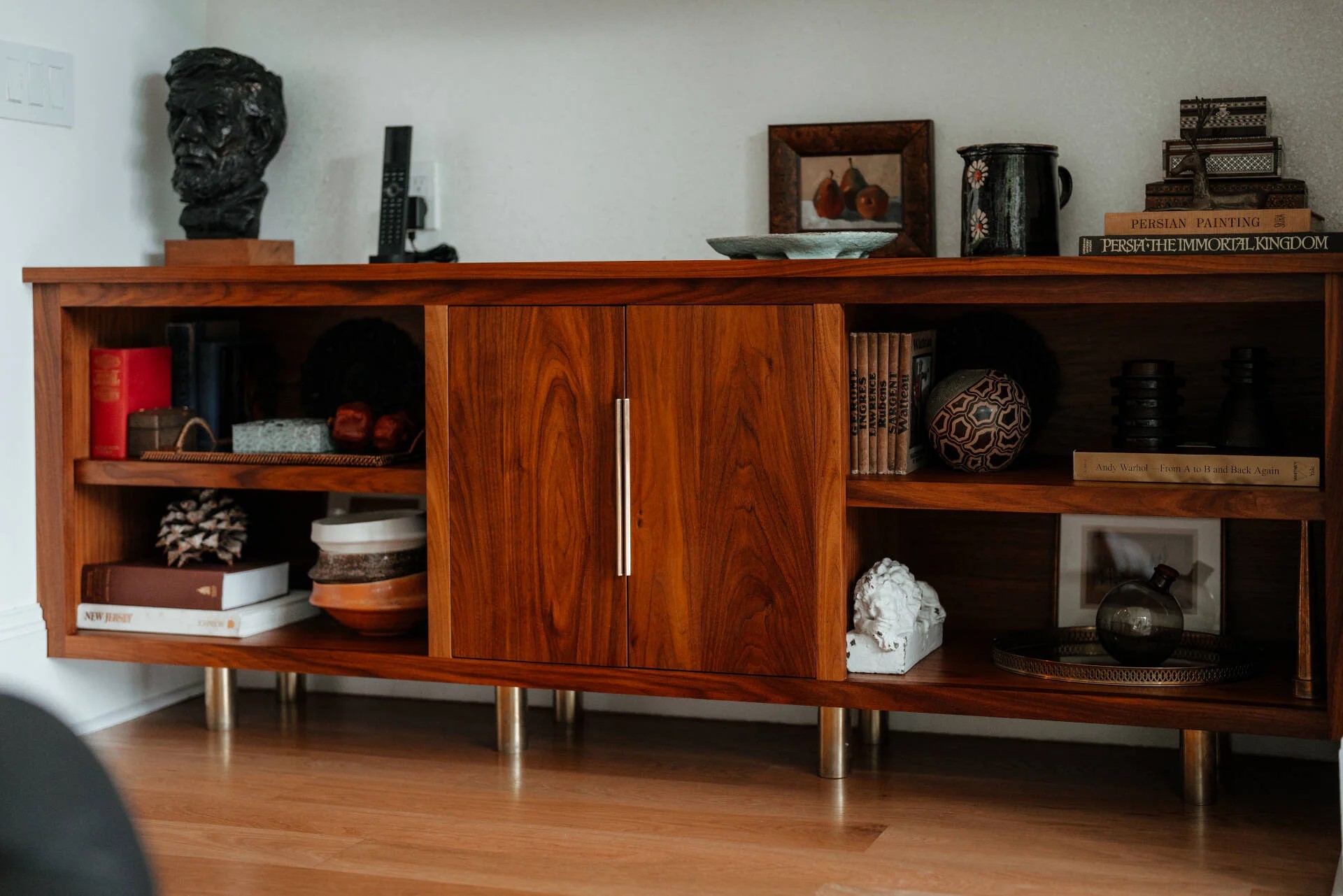
As Greene Street Joinery looks toward the next three to five years, Krug envisions a shop that evolves in capability rather than size. Instead of expanding dramatically or adding layers of management, he hopes to build a workspace that remains centered on craftsmanship. “We’re at a good place,” he said. “The goal isn’t to become huge. It’s to keep getting better at what we do.”
Krug believes the industry still underestimates what small shops are capable of in 2026. While large manufacturers offer scale and speed, he argues that small operations can hold their own by combining efficiency with craftsmanship. “Small shops can definitely compete with the big shops,” he said. “If you’re set up in the right space, you can really crank out a lot of work.” With the addition of streamlined workflows, modern tooling, and dedicated zones within the shop, Greene Street Joinery has proven that size isn’t a limitation.
For Krug, being a small shop is not a disadvantage but a competitive edge. “In terms of quality, I think being small is actually an advantage because you have a little more control,” he said. Without multiple hands touching a project before it ships, the team can monitor every stage more closely, maintaining consistency from milling to finishing. The simplicity of the workflow isn’t a constraint, he explained; it’s a strength. “We can put out a really well-made product without convoluting the process.” This belief in focused, thoughtful production underscores the identity of Greene Street Joinery and reflects a broader truth about today’s small-shop landscape: craftsmanship and efficiency can coexist, and small shops are uniquely positioned to prove it.
Krug doesn’t see Greene Street Joinery’s size as a constraint; if anything, he views it as a sweet spot for the kind of work they produce. “I think we’re at the perfect size for the amount of work that we have,” he said. While some shops limit their project scope based on square footage or labor capacity, Krug insists that the shop’s scale is never the deciding factor. “I wouldn’t say I let the size of the shop influence the work that I take on. It’s more of an afterthought. We basically have all the machines we want in there.”
That confidence reflects years of refining workflow, investing in the right equipment, and designing the space around efficiency rather than expansion for its own sake. With the CNC, edgebander, vertical panel saw, and dedicated finishing area all operating in harmony, Greene Street Joinery is able to deliver high-end, custom work without feeling the growing pains common to many small shops. The result is a balanced environment where craftsmanship and production capability operate side by side.