
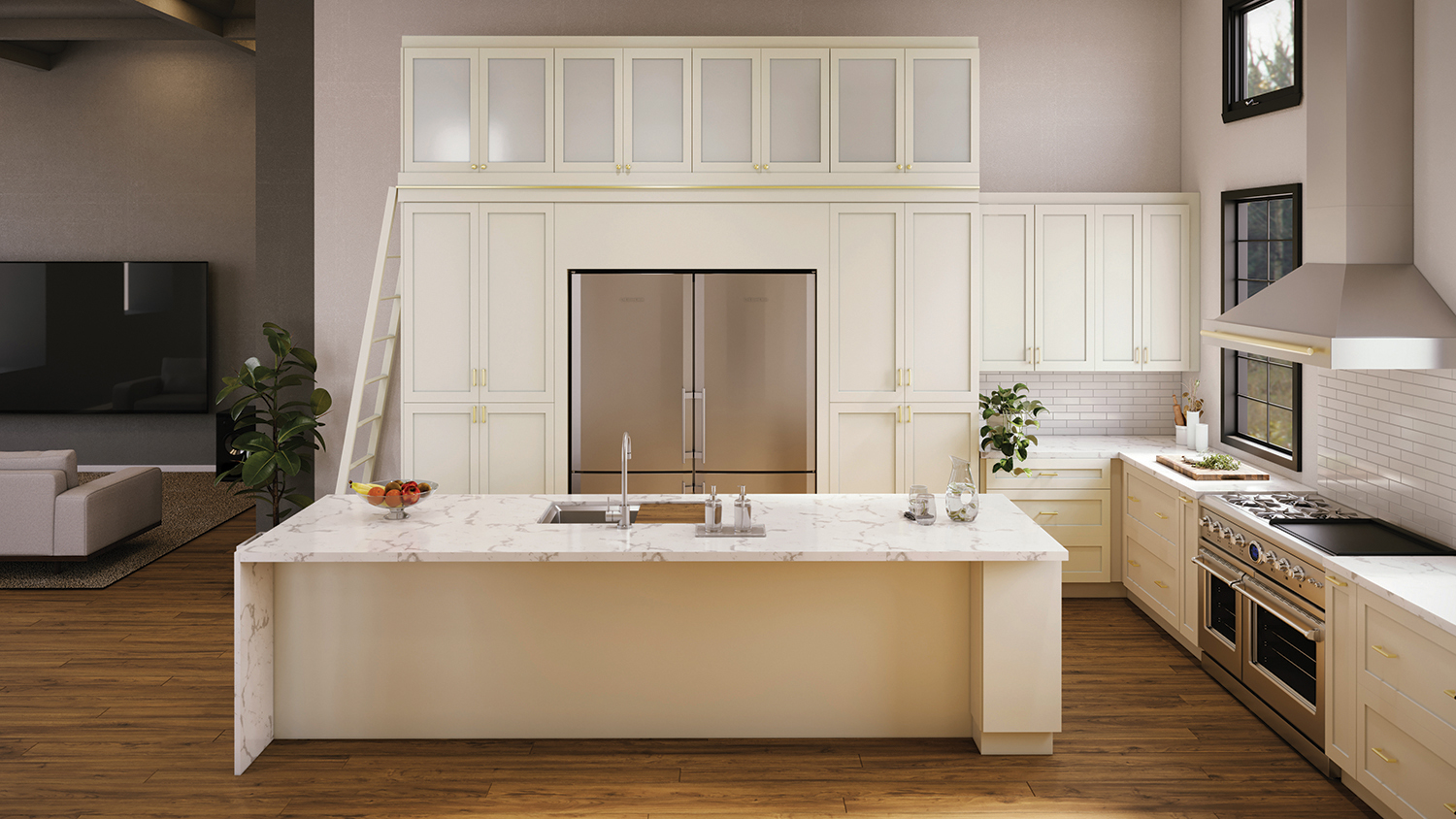
Wood might not completely dethrone the painted white-on-white kitchen in 2026, but it’s trying. Between a rise in use of solid wood as well as wood looks, a trend for more earth tones in general, and a shift to more practical and functional designs, current design influences are more subtle and less dramatic.
Combing through a wide variety of sources, including designers, manufacturers, suppliers, and reports from cabinet manufacturers, we’ve compiled this mostly subjective guide to what we see as the rising tides in key kitchen cabinet design elements for 2026. As the saying goes, your mileage may vary, but we think you’ll probably nod your head about most of these trends. However, be prepared for the ones you don’t recognize: Your customers will likely be asking you for them shortly.
Wood still on the rise
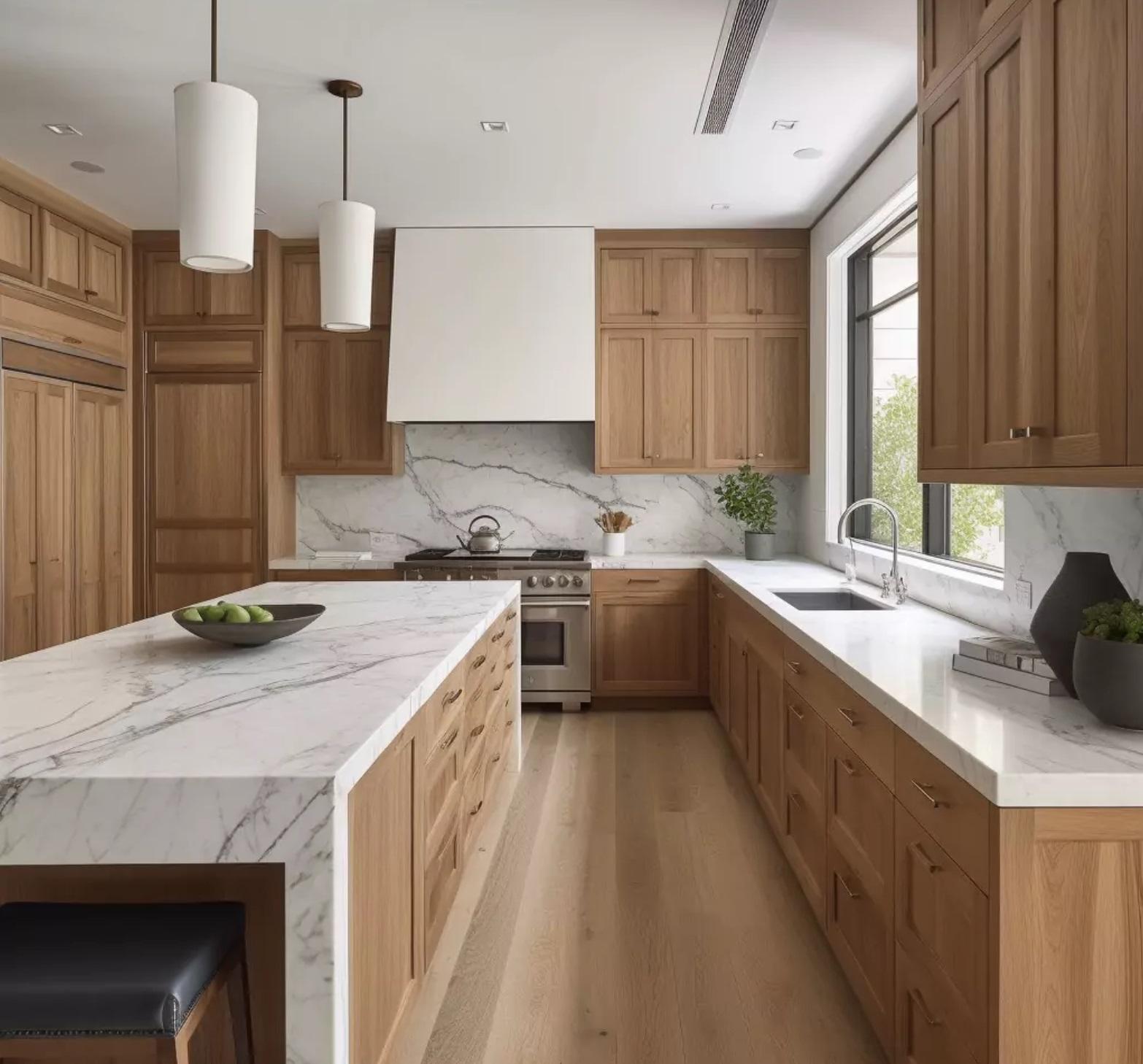
I am biased, of course, but it sure is a pleasure to see wood continuing its comeback. At one point, painted cabinets accounted for as much as 70 percent of the market, but wood is on a steady rise now, even if it has yet to overtake paint.
We couldn’t find definitive numbers, but according to the 2026 Houzz Kitchen Trends Report, paint is down to 52 percent. In that same report, stain, wood veneer, and natural wood finishes combined for 32 percent of the market. And “laminated veneer,” mostly a wood look, was another 4 percent.
Several designers say it’s all about “look and feel.” Customers increasingly want the tactile experience from wood or textured wood-look panels. Even if they don’t want an all-wood kitchen design, the trend is to at least use wood as a strong accent. It takes the form of doing all the lower cabinets in wood or using a dominating wood island as a design statement to offset white or neutral painted cabinets on the walls.
White oak rules
Houzz claims in its kitchen trend report that maple is still the top choice of the 70 percent of homeowners who specify solid wood for cabinet fronts. But in talking with designer after designer and cabinet shop after cabinet shop, all I’m hearing is white oak. Houzz says white oak has 15 percent of the market, but I’m seeing a lot stronger dominance for white oak across media platforms.
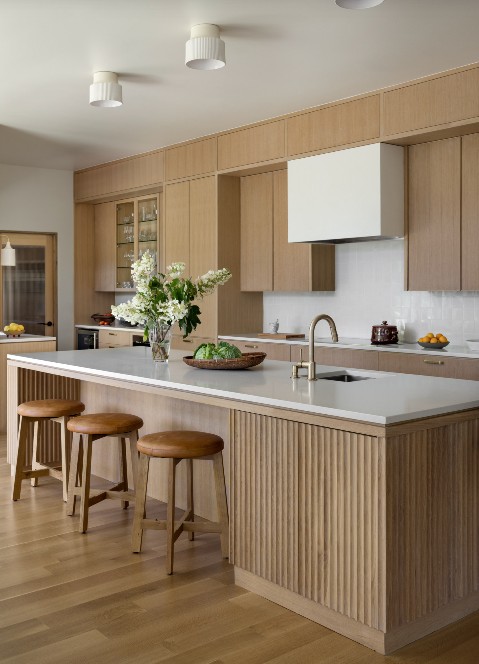
And it’s not just any white oak. It’s natural-finished, rift-sawn white oak. People like the homogenous creamy straight grain of rift-sawn white oak. While quartersawn white oak, with its characteristic ray fleck figure, was the pinnacle of Arts & Crafts-style furniture, that’s not what people are looking for in a kitchen in 2026.
Texture trends
Emphasizing the long, straight grain look, lots of modern kitchen designs using rift-sawn white oak also feature reeded or grooved panels, giving even more dramatic vertical motion to the design. This is part of a larger trend, putting more emphasis on not only the look of the kitchen, but the feel to the touch.
People want to feel the texture of the wood. Even when it’s not real wood, a textured TFL wood-look panel wins over customers looking for a more natural look and feel to their cabinets.
Matte and super-matte finishes are increasingly popular, whether it’s a paint finish or a topcoat over wood. Glossy surfaces still make an appearance in ultra-modern designs, but that’s increasingly a smaller segment. Low-sheen and matte finishing also helps reduce the appearance of fingerprints and smudges.
Color trends toward earth tones
It seems like everybody and all their cousins are coming out with a “color of the year,” and they are mostly different. Pantone, the granddaddy of this annual color fest, went with an off-white color they called “Cloud Dancer” this year. Dutch Boy Paints followed suit with an ivory color, and Sherwin Williams went for khaki.
Several other color trendsetters suggested earthy brown tones ranging from dark espresso to “warm eucalyptus.” And there were a couple of blues and greens, in the mix, too.
For kitchen cabinets, the reality is the all-white kitchen in some form or other is not going away, but you are more likely to see some form of white on the walls and upper cabinets. Contrasting wood, mostly in light to medium shades, or a splash of color such as blue, especially to highlight an island or maybe even just a few cabinets, is likely to be seen in stylish kitchens in 2026.
N-Hance Wood Refinishing, a cabinet refinishing franchise, reports kitchen finishes have “gravitated toward warm, welcoming and soothing colors,” such as sage green, forest green, and creamy off-whites.
Door styles: Shaker, slab
According to Houzz, the so-called Transitional style continues its domination with 25 percent of the market, followed by Traditional at 12 percent, Modern at 11 percent, Contemporary at 10 percent, Farmhouse at 9 percent, and Midcentury at just 6 percent.
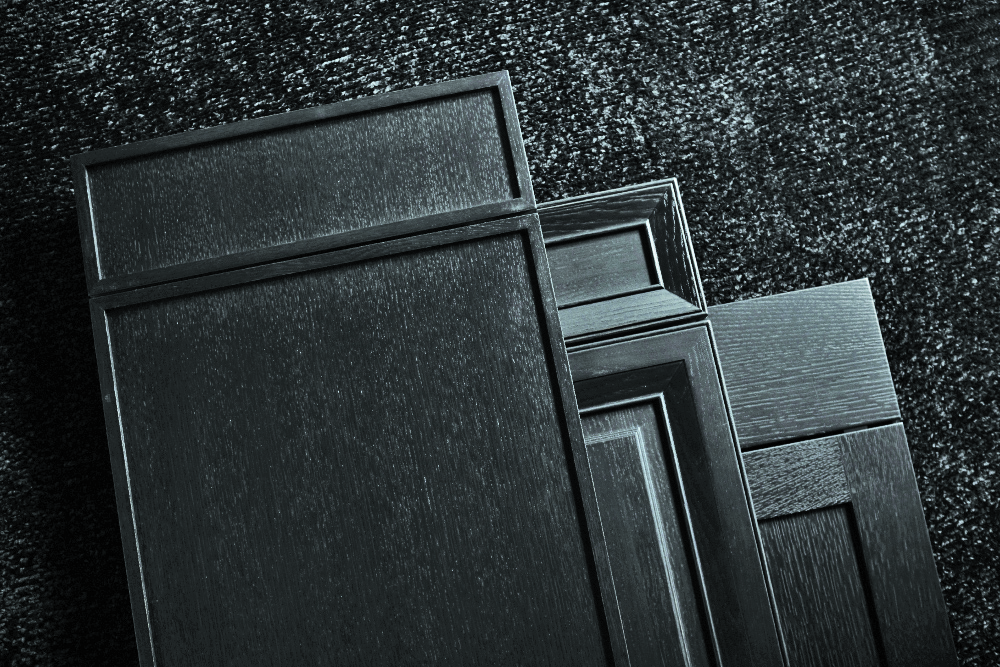
Transitional style fits right in with the continuing lead of Shaker-style doors at 58 percent of the market. But there is a twist. Included in that so-called Shaker design is a pattern that the old Shaker cabinetmakers would never recognize: the slim Shaker door. With extra narrow stiles and rails, the slim Shaker door offers a tidy, lightweight look, but it also offers some challenges for manufacturers. I’ve seen quite a few different ways manufacturers have achieved this style, sometimes with little more than applied mouldings.
Slab doors or flat-panel doors account for more than a fifth of the market. That’s a growing share reflecting some of the growth in Euro cabinet designs.
Frameless continues to grow
Although figures are hard to come by, it appears that frameless cabinet box construction is growing but is still neck-and-neck with face-frame construction among U.S. manufacturers. Whether you call it frameless, Euro, full-access, or anything else, the clean frameless box has slowly been making inroads in the American market. It already dominates in Canada.
Still, many American companies continue to insist on building face-frame cabinets, although they often feature full overlay doors that make them outwardly indistinguishable from their Euro competitors.
A niche market of face-frames with inset doors has stayed steady in mostly high-end applications with a more traditional look.
Layout trends
One of the more interesting trends in kitchen design this year is the growing emphasis on dividing a kitchen up into more special purpose segments, some of which might be cleverly hidden from view. Butler pantries, beverage stations, baking stations, and dedicated pantry rooms are all popular. Sometimes these use hidden doors disguised as cabinet doors to reveal an entire room-sized facility.
Even if it’s not a dedicated room, 47 percent of homeowners are asking for pantry cabinets, according to Houzz. They are also requesting built-in seating, breakfast bars, and baking stations.
Storage in general is a top priority, and many people are looking for ways to get appliances off the countertop and out of the way.
Layout changes are also a top driver when people decide to renovate existing kitchens, with the L-shape (35 percent) and U-shape (31 percent) dominating.
Accessories: pullouts, lighting
Inside and outside the cabinets, functionality enhancements are key drivers. Adding or upgrading a kitchen island is a top priority. Another big priority is to upgrade the kitchen to accommodate aging in place.
For that goal, features such as pullout cabinets (59 percent), additional lighting (51 percent), wide drawer pulls (44 percent), rounded countertops (34 percent), and non-slip floors are popular.
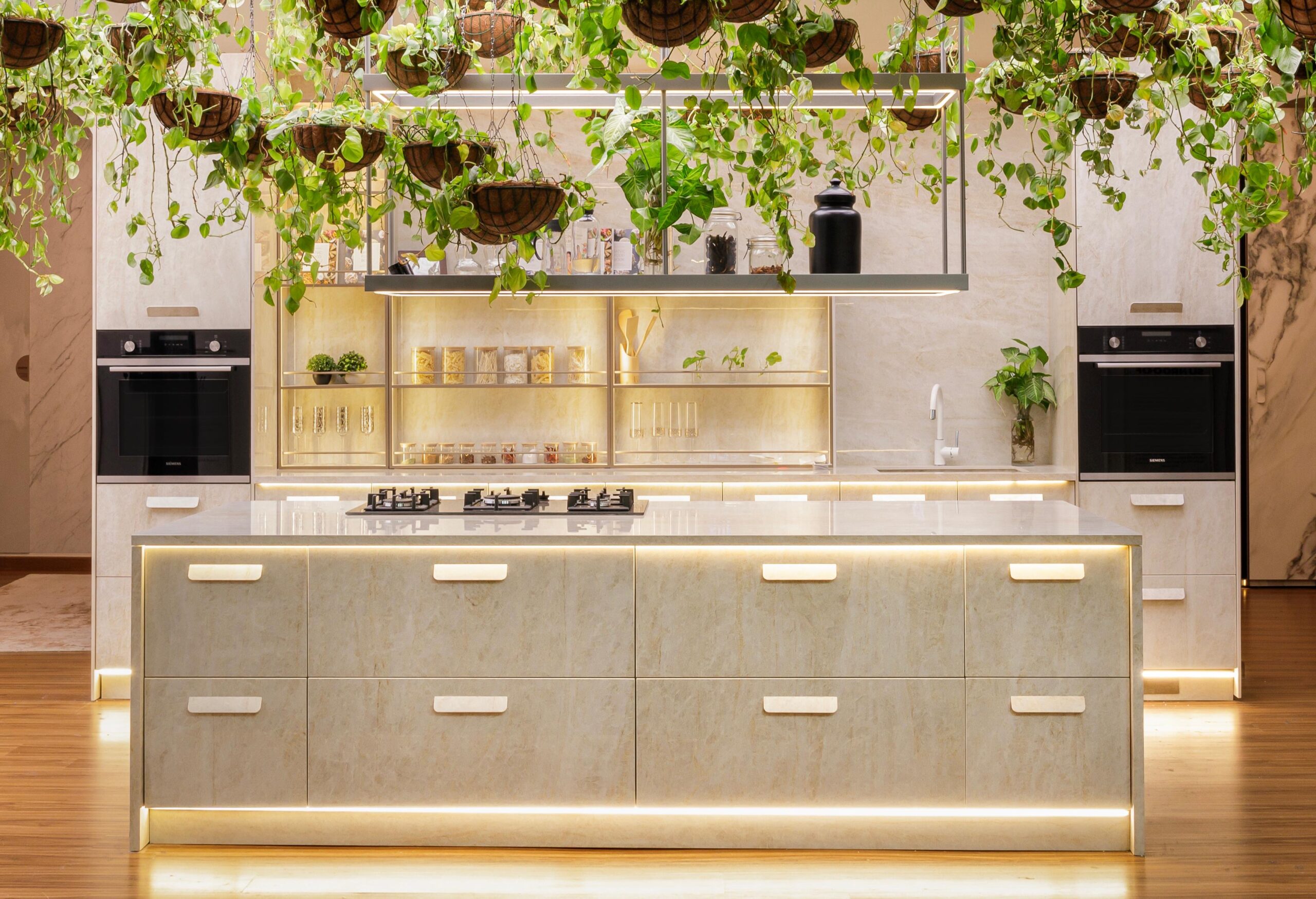
With more lighting, including in-cabinet illumination, comes more technology. Remote controls, smart home features, apps, and a whole range of functions connected to your smartphone are part of almost every lighting system offered today.
Hardware trends
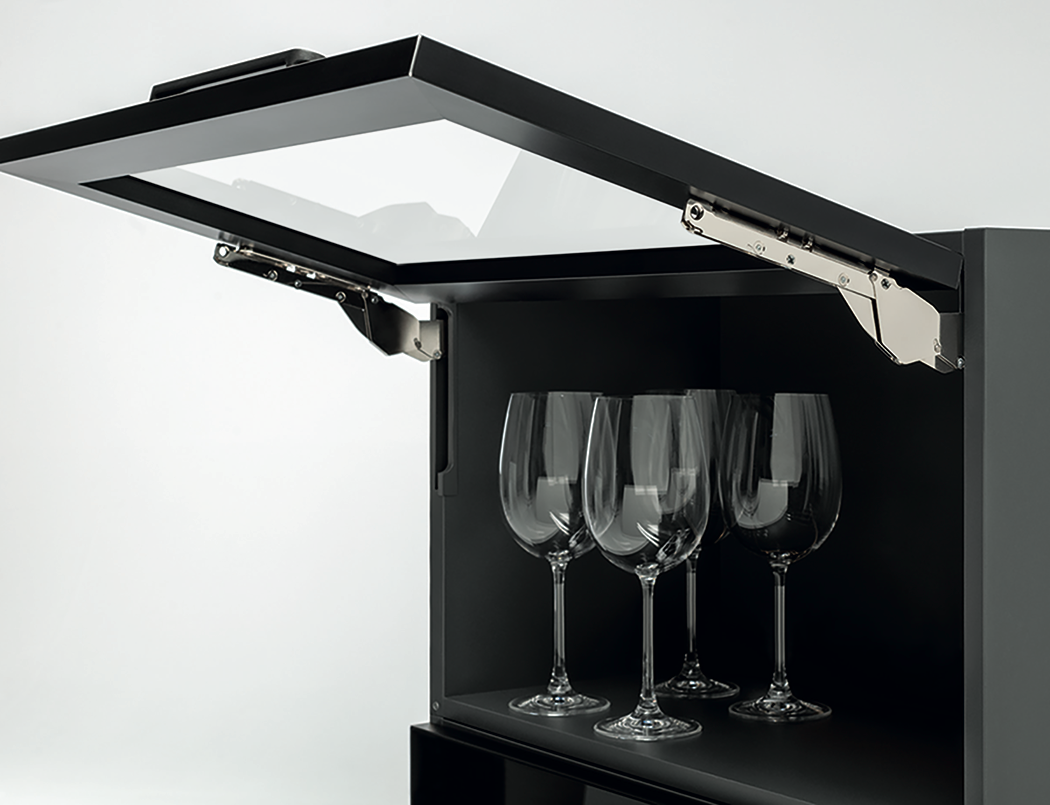
Hardware trends seem to be going more in the functional and less in the fashion direction. Hafele is among those seeing an industry push toward more compact, space-efficient hardware to maximize usable cabinet interiors while maintaining smooth, controlled door movement and flexible installation options. Its new Free Slim flap door hinge, just introduced at KBIS, is an example with an ultra-thin 8mm profile.
“Designed with the future of interiors in mind, Hafele’s Free Slim redefines what’s possible in a space-saving design,” said Jeff O’Sullivan, director of Marketing of Hafele America Co. “Its minimalist profile, coupled with powerful spring technology, gives designers unmatched flexibility and ease of installation, all while maintaining a quiet, premium experience for end users.”
According to Wurth, a major hardware distributor, one of the big hardware trends for 2026 is mixed metals. Rather than making everything match, customers are mixing different looks, but the trick is to do it in an intentional way.
A “secondary” finish can be used to highlight one controlled place, such as island cabinets, a tall pantry bank, or a bathroom vanity.
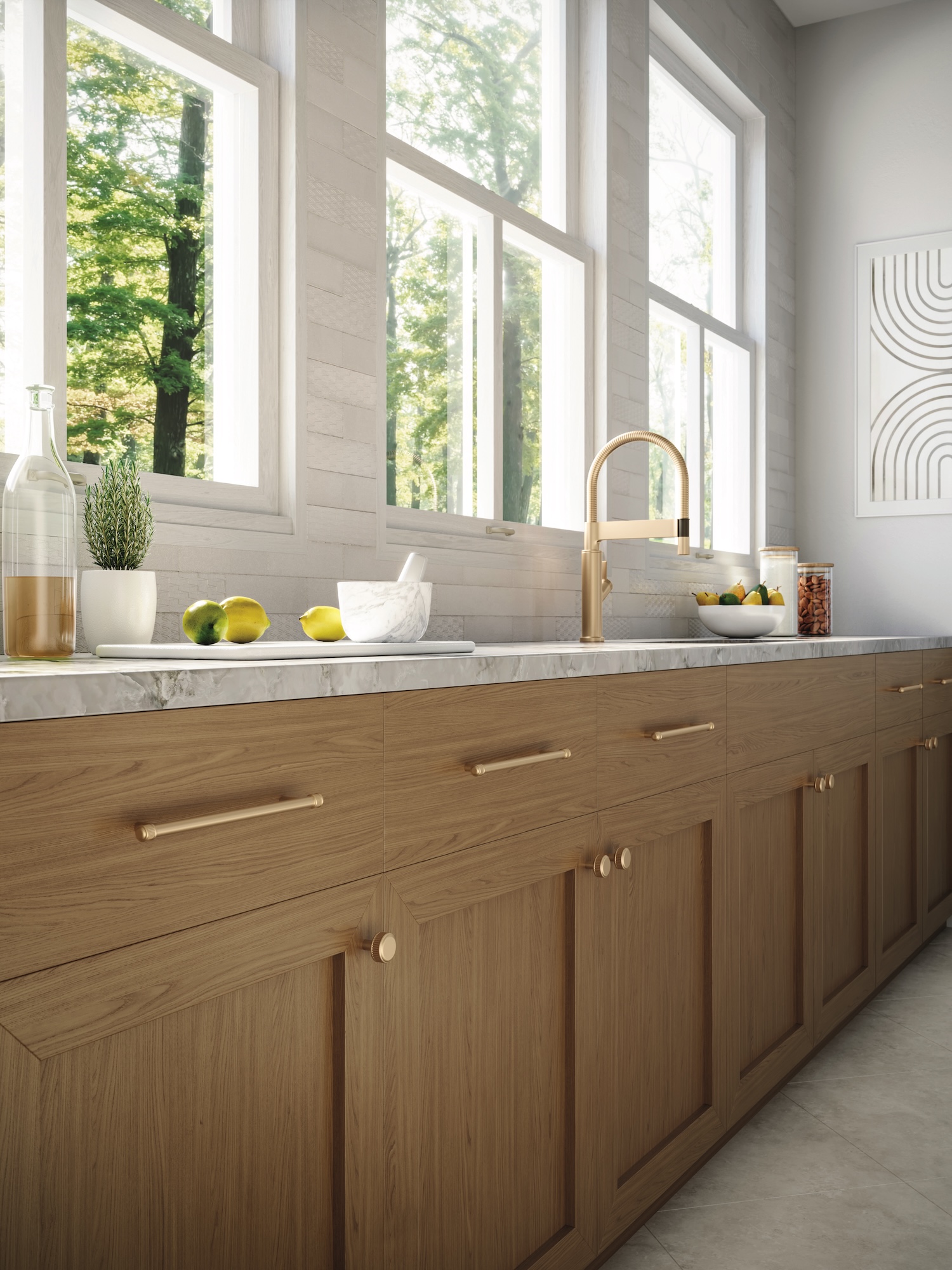
Wurth also says that warm finishes continue to be popular, such as brass, antique brass, and brushed gold tones. There’s a practical reason, too: Brushed versions are winning over shiny gold because they hide fingerprints and feel more timeless.
Countertop materials
Engineered quartz countertops continue to lead, according Houzz, but their market share has dropped 7 points to 32 percent. That’s still double granite, which is number two at 15 percent and quartzite at number three with 10 percent. Butcher block, soapstone, laminate and marble were all listed at 5 percent or less.
If you are the copyright owner and wish to request removal, please contact: info@woodworkersnews.com.