
As of February 2026, the transition from traditional concrete and steel to high-performance wood composites is no longer a niche environmental preference but a mainstream commercial strategy. This evolution is propelled by federal “Buy Clean” initiatives, $80 million in USDA Wood Innovation Grants, and the rising global necessity for climate-resilient urban infrastructure.
Market Dynamics: The Rise of Mass Timber and ESG Metrics
The surge in domestic demand is led by industry powerhouses and innovation leaders, including Boise Cascade Company, Weyerhaeuser, Engineered Woods LLC, and Louisiana-Pacific Corporation (LP). These organizations are scaling production of advanced materials like Cross-Laminated Timber (CLT) and Laminated Veneer Lumber (LVL) to meet the rigorous Environmental, Social, and Governance (ESG) targets now demanded by real estate investors and municipal building codes.
Key drivers for this expansion in the U.S. market include:
Carbon-Negative Construction: Engineered wood serves as a “carbon sink,” sequestering biogenic carbon for the life of the building. This makes it an essential tool for architects aiming to meet net-zero certifications and green building standards.
Labor Efficiency and Speed: Factory-built wood components can reduce on-site construction labor by up to 50%. With the U.S. facing a persistent skilled labor shortage, the “plug-and-play” nature of engineered beams and panels provides a critical solution for housing developers.
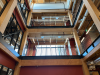
Urban Infill and Mid-Rise Growth: Updated building codes now allow for mass timber structures up to 18 stories, opening new revenue streams in the mid-rise residential and commercial sectors that were previously dominated by concrete.
Segmentation and Performance Insights
The U.S. market is diversifying as the “skinification” of residential interiors and the hardening of industrial shells create distinct product needs.
By Product Type: Plywood and OSB Maintain Dominance
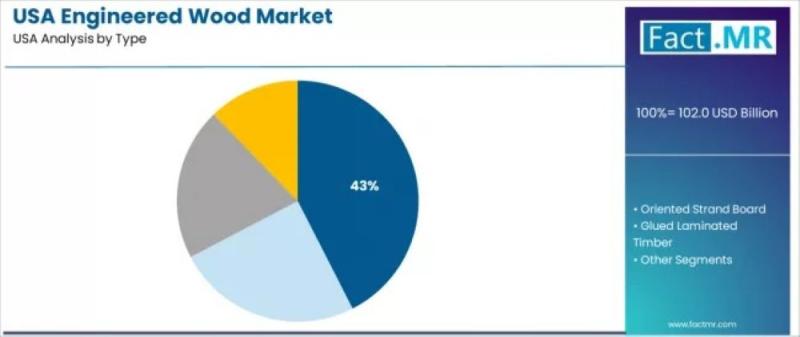
Plywood continues to hold a significant market share-exceeding 40%-due to its unmatched versatility in structural sheathing and subflooring. However, Oriented Strand Board (OSB) is witnessing the fastest adoption in the residential sector for its cost-effectiveness, while CLT is the highest-growth premium segment, expanding at a 12.45% CAGR as it penetrates the commercial high-rise market.
Regional Trends and Residential Influence
The United States remains a global leader in engineered wood innovation due to several domestic factors:
The Remodeling Boom: Residential construction and remodeling currently account for over 65% of demand. As U.S. housing stock ages, the demand for highly durable, moisture-resistant engineered flooring and cabinetry is reaching record highs.
Strategic Investments: Major domestic players are reshoring production. A prime example is Weyerhaeuser’s recent USD 500 million investment in a new TimberStrand® facility in Arkansas, significantly boosting the nation’s internal capacity for high-stress structural materials.
Climate Resilience: Engineered wood’s superior dimensional stability makes it the preferred choice for regions experiencing extreme weather volatility, as it resists the warping and swelling common in solid lumber.
The Future of Wood Technology: Bio-Adhesives and Self-Healing Panels
In 2026, the industry is witnessing a “Chemical Revolution” within wood bonding. Manufacturers are moving away from traditional formaldehyde-based resins in favor of bio-based adhesives derived from lignin and soy. These innovations not only improve indoor air quality but also simplify the end-of-life recycling process for wood composites. Furthermore, the development of fire-retardant treated (FRT) engineered wood is effectively neutralizing one of the primary historical barriers to timber adoption in dense urban environments.
About the Industry Outlook
The demand for engineered wood in the USA represents a strategic intersection of forestry stewardship and advanced structural engineering. As the nation scales its affordable housing projects and modernizes its infrastructure under the Bipartisan Infrastructure Law, engineered wood is positioned as the primary material of choice for the next generation of sustainable American architecture.
If you are the copyright owner and wish to request removal, please contact: info@woodworkersnews.com.