

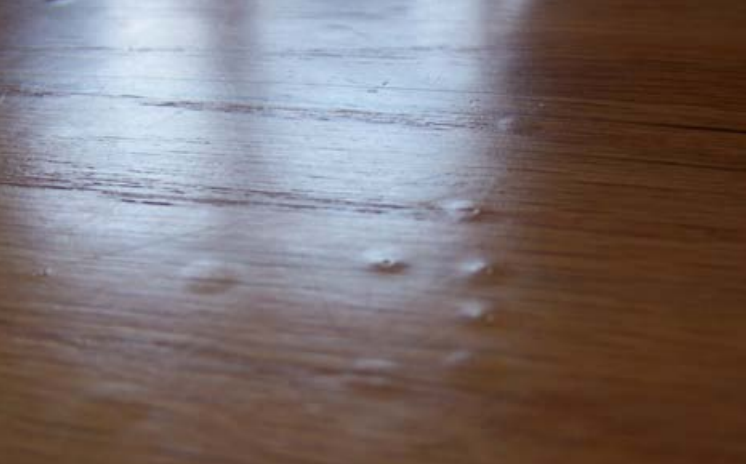
Bottom line: When a finish suddenly develops fisheye, craters, or “pull-back” circles, the cause is often not the product – it’s silicone or oil contamination in the shop that keeps the coating from wetting the surface.
What we know
- Fisheye typically shows up as small round craters or bare circles that appear moments after application, especially in spray finishing and fast-drying topcoats.
- The most common culprits are low-level contaminants: silicone from polishes and lubricants, aerosol overspray (including “dry” drifting mist), oily residues from compressed air lines, and cross-contamination from rags and gloves.
- Once contamination is present, sanding alone can spread it across the panel and drive it deeper into open grain, creating a repeat failure on the next coat.
Why it matters for shops
- Fisheye failures are expensive: they can force a full strip-and-refinish, waste material, and blow up delivery schedules – especially on large flat parts like doors, panels, and tabletops.
- The fixes that “seem” logical (more sanding, heavier coats, more air pressure) can make the outcome worse and create inconsistent results from one batch to the next.
What to do now
- Quarantine silicone products. Keep furniture polishes, “shine” sprays, and silicone-based lubricants out of the finishing zone entirely. Store them in a separate cabinet, and don’t use them on benches where parts get staged.
- Reset your surface prep routine. Before the next coat, do a controlled clean: vacuum dust, then wipe with a compatible solvent for your finish system using clean, disposable wipes. Avoid mystery rags that may contain softener, oil, or shop grime. For sanding steps, standardize sanding grits and remove dust between grits to prevent embedding residue.
- Check your compressed air. If you spray, drain the compressor, verify the water separator works, and inspect hoses for oil carryover. Even small oil mist can cause repeated fisheye across multiple parts.
- Use a barrier coat when needed. If contamination is suspected and you must save the job, a thin sealing coat (often shellac-based, depending on system compatibility) can isolate the surface before the topcoat. Test on scrap first to confirm adhesion and appearance.
- Control the finishing space. Treat the finishing corner as a “clean room light.” Cover projects, limit aerosol use nearby, and keep dedicated gloves, wipes, and tack materials only for finishing. This is one of the fastest shop cleanliness upgrades a small shop can make.
Related topi