
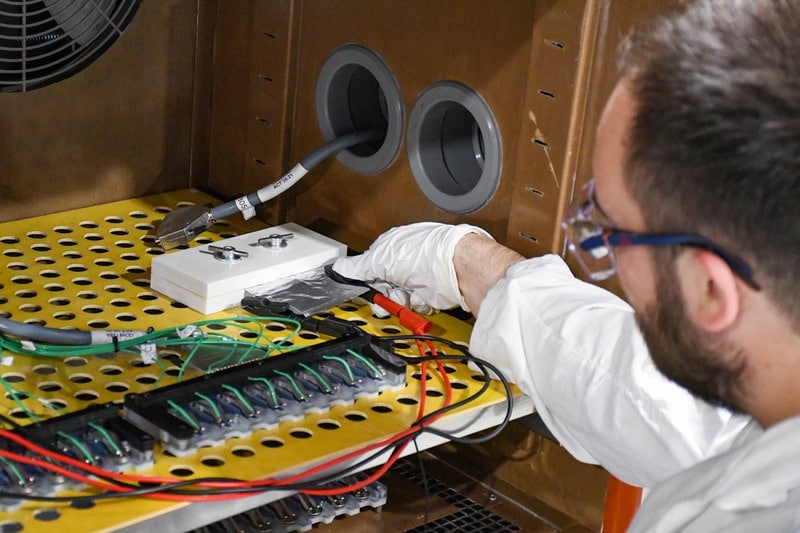
Researchers at Germany’s Fraunhofer IKTS introduced a sodium-ion battery that uses lignin, a natural polymer from wood — as the basis for its anode, featuring lignin thermally converted into hard carbon for sodium storage. The team sourced lignin locally from the Thuringian Forest and incorporated it into lab-scale cells designed to avoid critical metals and reduce fluorine content in electrode materials.Testing showed the lignin-derived hard carbon stores sodium ions well and delivered strong cycle stability in early trials, with lab cells showing minimal degradation after 100 charge–discharge cycles. The battery pairs the lignin anode with iron-based positive materials (Prussian Blue analogs) to create a safer, more recyclable alternative to lithium chemistries.
This approach matters because it repurposes an abundant pulp-industry byproduct, lowers reliance on mined critical metals and offers a cost-effective option for low-power applications like microcars and warehouse vehicles.
Trend Themes
1. Sustainable Energy Storage – The shift towards sustainable energy storage solutions is highlighted by the use of lignin, a renewable wood-derived material, to create eco-friendly sodium-ion batteries.
2. Battery Material Innovation – Innovations in battery technology are emerging as researchers explore the use of alternative materials like lignin-derived hard carbon to enhance sodium-ion battery performance and stability.
3. Circular Economy in Energy – Emphasizing the principles of the circular economy, wood byproducts such as lignin are being repurposed in the development of environmentally sustainable energy solutions.
Industry Implications
1. Renewable Energy Industry – In the renewable energy industry, lignin-based sodium-ion batteries represent a shift towards greener and more sustainable storage technologies.
2. Battery Manufacturing – The battery manufacturing sector is seeing transformative potential with the incorporation of locally sourced, biodegradable materials like lignin, reducing reliance on scarce metals.
3. Automotive Industry – The automotive industry is gradually embracing sodium-ion systems, especially for low-power applications, as a cost-effective and recyclable alternative to traditional lithium-ion batteries.
Legal Notice: This content is curated and published under Fair Use guidelines for news reporting and educational purposes. Source: https://www.trendhunter.com/trends/fraunhofer-iktsIf you are the copyright owner and wish to request removal, please contact: woodworkersnews@gmail.com.