


Recent actions on tariffs are having largely negative effects on the woodworking industry, according to a new survey conducted by the Woodworking Network to its subscriber base for FDMC magazine and Closets & Organized Storage magazine.
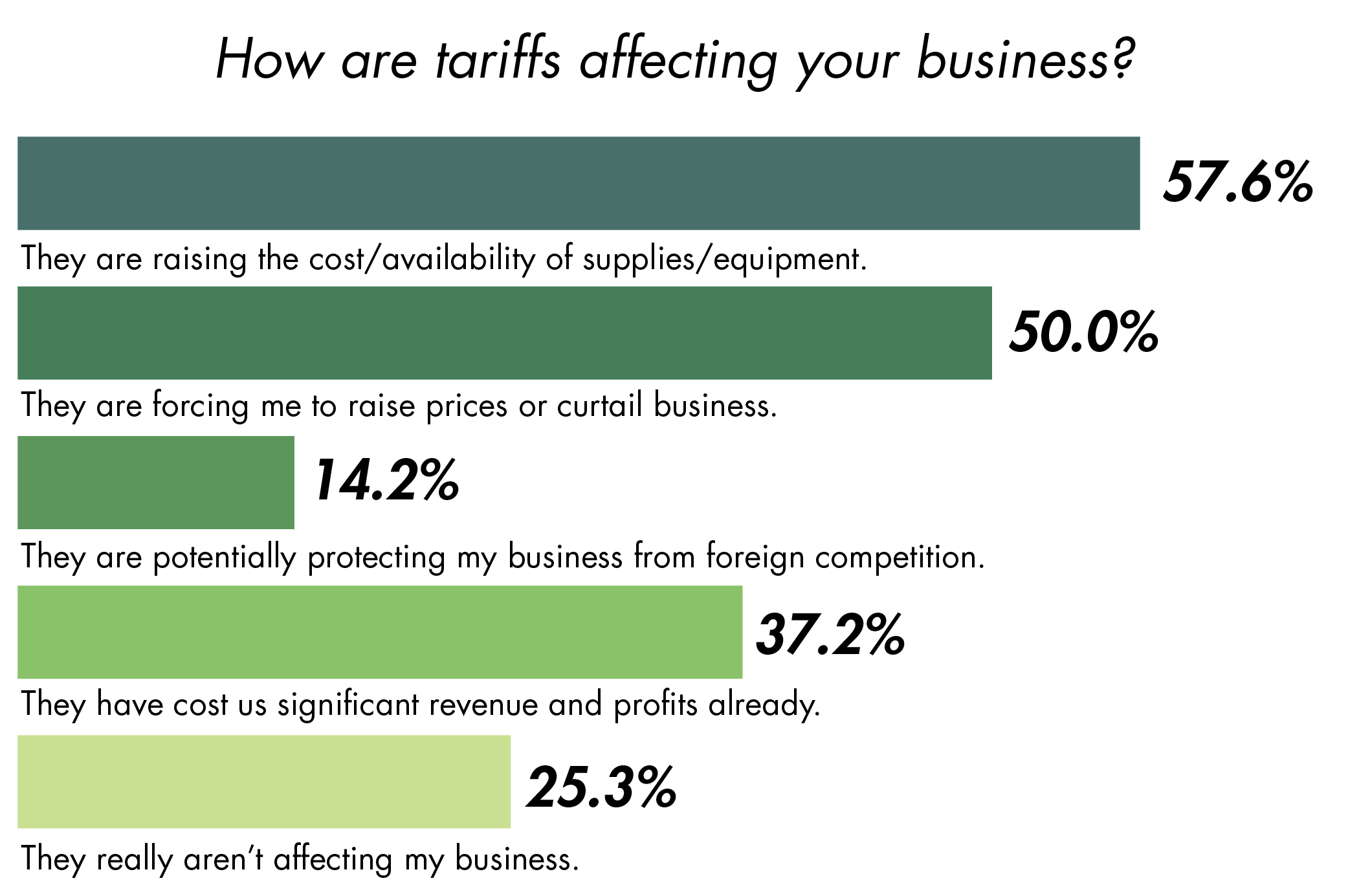
Nearly 58 percent of respondents said tariffs are raising the cost and/or availability of supplies and equipment. That has led 50 percent to raise prices or curtail business.
More than 37 percent said the tariffs “have cost us significant revenue and profits already.”
But not all responses were negative. About one quarter of respondents (25.3 percent) said the tariffs really aren’t affecting their businesses. And slightly more than 14 percent supported the tariffs, saying they are “potentially protecting my business from foreign competition.”
Responses all came to an online one-question survey conducted to obtain feedback from the Woodworking Network subscriber base on how the current tariffs are impacting their business. Email invitations were sent to more than 27,000 subscribers of FDMC and Closets & Organized Storage on January 15, with reminders sent on January 23 and January 29. The survey closed on February 3 with 288 completed responses.
Margin of error for the survey was put at 6 percent with a 95-percent confidence level.
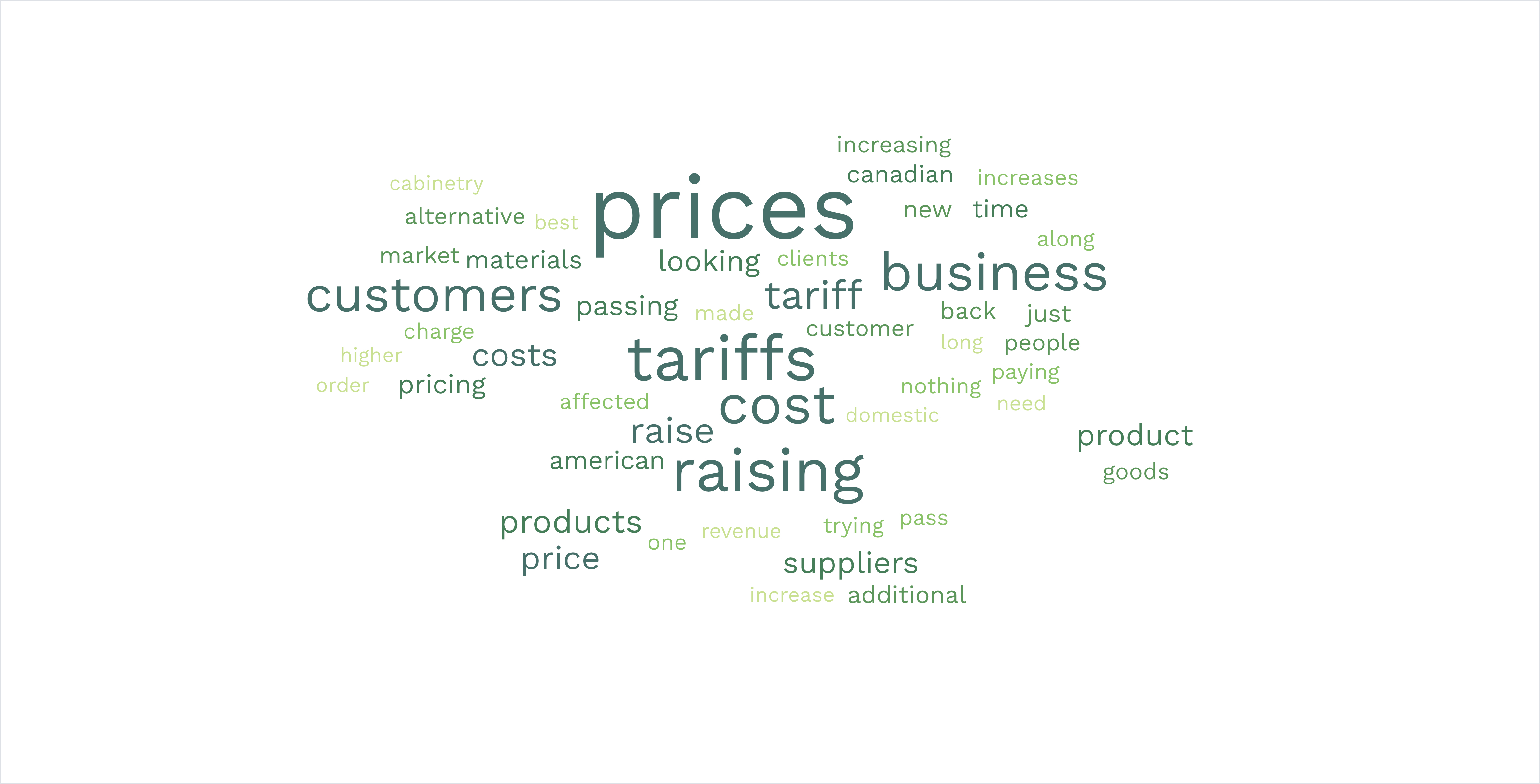
In addition to the initial question about the impact of the tariffs, respondents were invited to say what they are doing about it, and hundreds took the time to answer, often with heartfelt statements expressing a range of emotions from exasperation to resignation, and there were even a few who celebrated the tariffs.
“The tariffs are hurting our business to a very high degree,” said one respondent. “We are losing business because we can’t eat the cost of the tariff charges and our customers are cancelling orders because they won’t take the price increases. In the long run, the tariffs are going to really kill our business. We get goods in from overseas because we have to, we can’t get many of the things we need in the U.S. or they are substantially higher in the U.S. Fact is the U.S. either can’t supply us with the materials we need, or they are priced so high we can’t source them now to build our products. PLEASE ASSIST IN GETTING RID OF THE
TARIFFS (caps by respondent).”
A number of respondents replied simply with curt responses like “paying them; no other course” or “raising prices.” A handful said “closing my business,” “retiring,” or “going out of business” or “leaving the industry.”
Others talked about pragmatic measures. “Raising prices. I’ve been very booked for the last several years. I’m now bidding many fewer projects. I’ve also decided against investing in a new edgebander at this time.”
But some endorsed the tariffs. “I have no problem with the tariffs,” said one person. “Move all manufacturing back to the US and keep the cheap China garbage out. A few things I buy have increased a bit, but I mostly buy domestic goods, so nothing that is affected too much. Decorative hardware is the one thing that mostly comes from other countries and that extra cost just gets passed on to the customer.”
Still others vehemently lashed out at President Trump. “The Orange Moron in the White House is the sole reason my business of 30 years has hit the hardest skid we’ve hit in our history as a company.”
A repeated theme was business upheaval attributed to how the tariffs have been handled. “The amount of uncertainty (included in this chaos is tariffs) that this administration has caused in the marketplace has been catastrophic to our business,” wrote one respondent. Another said they were “deferring decisions. We don’t know costs or government policy one day to the next.”
Several people wrote about the specific challenge of doing business across the Canadian border. “Working together with our domestic and Canadian partners to navigate the best methods for all of us to succeed and sell our products. It is different per business as tariffs affect the entire structures of independent business operations and distribution methods,” said one survey respondent. “Profit margins are supremely effected, some manufacturers are eating it entirely, some have pulled out of markets entirely, and some are working on ways to save profits by sourcing materials from new suppliers.”
One respondent attacked the survey itself. “This is a biased survey. When you ask questions that provide the either/or points, you skew the honesty of the situation.”
FDMC Publisher Tim Fixmer responded with more background on the survey.
“The survey was conducted in two efforts: one to the North American Woodworking community, the results of which are covered in this article, and the other was to companies who supply technology and materials to the first group,” he said. “We received very few responses from suppliers, in fact, too few to make any projection. Perhaps the lack of response from the supply side is the result of mass confusion caused by the chaotic way in which our government has chosen to implement the tariff strategy. Or perhaps suppliers are simply undecided on their mitigation strategies. A third possibility is that suppliers are simply waiting to see how their customers will mitigate the situation. Regardless of the cause, I have to say we are disappointed in the lack of response. We know that there is no shortage of opinions on the part of suppliers, and we would like to analyze and summarize them for you. Stay tuned for updates on that.”
Fixmer also offered his own views for the year ahead.
“We know that 2026 will be a stronger year for wood products manufacturing as both suppliers and fabricators settle in to their individual mitigation strategies, and the government throttles back on some of the punitive measures that have been enacted and some of the threats that have been bantered about,” he said. “Once the situation becomes less chaotic and the waters calm a bit, business will rebound significantly. After all, the housing shortage is real from coast to coast, and the love of wood products in furniture, cabinetry, millwork, and store fixtures certainly isn’t declining.”
If you are the copyright owner and wish to request removal, please contact: info@woodworkersnews.com.