

Legislation to expand wood pellet manufacturing in Louisiana is gaining traction despite concerns over the industry’s connection to underground carbon storage, which has attracted a growing number of critics among state lawmakers.
Louisiana is a burgeoning producer of wood pellets, which have been branded as a sustainable alternative to coal for generating electricity in overseas markets. As of 2023, mills in the South produced about 85% of the America’s wood pellet exports, according to the U.S. Department of Agriculture.
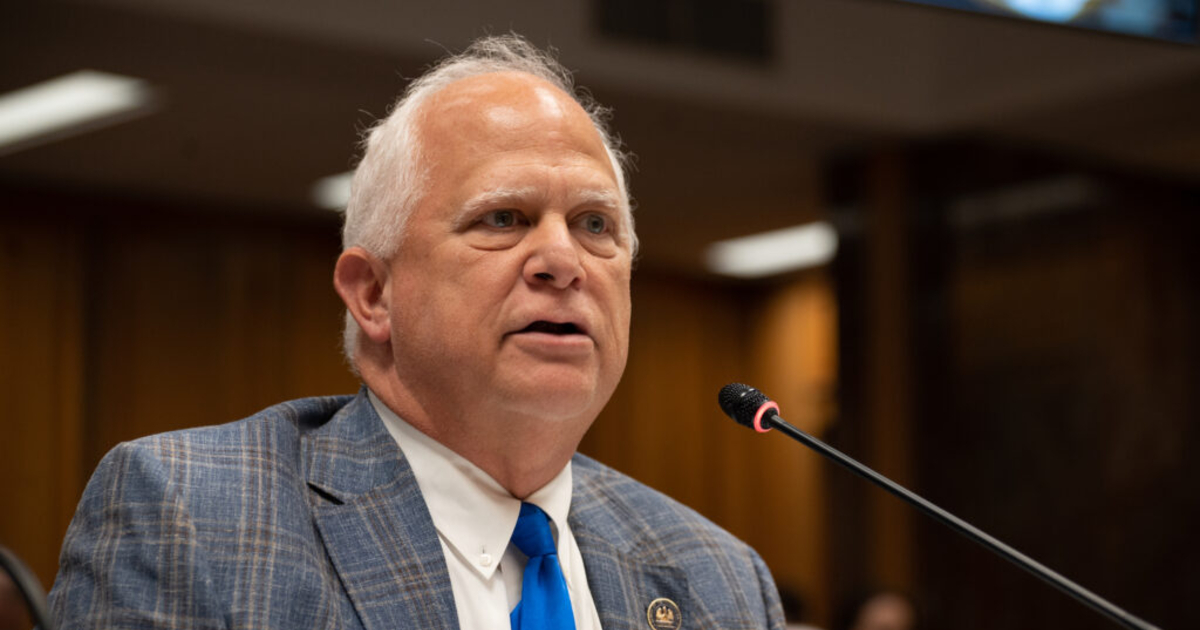
Reps. Chuck Owen, R-Rosepine, and Rodney Schamerhorn, R-Hornbeck, are carrying the proposed Louisiana Wood Pellet Manufacturing Strengthening Act. It directs the Louisiana Economic Development agency to promote the expansion of the industry throughout the state. A slightly watered-down version of the proposal advanced from a House committee Tuesday.
The bill has moved to the House floor despite contention over the industry’s stated reliance on carbon capture and sequestration, a point of tension between legislators and economic development officials. Louisiana is one of six states the federal government has allowed to issue their own permits to drill the wells needed to store smokestack emissions deep underground.
Legislators who have become hostile to carbon dioxide sequestration projects in their local districts openly disagree with economic development officials on whether the wood pellet industry even needs to store the CO2 they generate in order to have a home in Louisiana.
“Do I think it’s going to affect the industry that’s coming to Louisiana? No, because we have low utility rates, and we have all the water they need,” Schamerhorn in an interview Thursday.
Owen and Schamerhorn have also sponsored proposals to require local approval for carbon sequestration projects and the wells associated with them. This seemingly puts them at odds with state officials, including one who testified during Tuesday’s hearing on the wood pellet bill that such bioenergy projects “are very much dependent on” carbon storage.
Paige Carter, chief business development officer for Louisiana Economic Development, said the state had been working on a $2 billion project in Beauregard Parish using bioenergy feedstock, but the unnamed company behind the plans eliminated the location as a site over a “lack of confidence” that CO2 storage development would take place in the parish.
One of Schamerhorn’s bills calls for Beauregard voters to approve CO2 storage projects before they can move forward.
He and Owen are among nine legislators who have sponsored a total of nearly two dozen bills to restrict or provide local votes on carbon storage projects. Some of these lawmakers have relayed concerns from their constituents over environmental and health risks from carbon storage and the pipelines that transport CO2 to the underground sites.
But there are also those who reject the notion that climate change, or the need to contain carbon emissions, exists.
“I am 100% against the notion that we have to decarbonize,” Owen said in an interview.
Schamerhorn said he agreed with Owen, calling climate change a “scam.”
But both lawmakers still want Louisiana to take advantage of the wood pellet business opportunity.
“There is a demand, primarily overseas, for a wood product that we have in this state, that we have at a plentiful level, that we are barely scratching the surface on,” Owen said Tuesday during the House Commerce Committee meeting where his bill was approved.
Owen and Rep. Danny McCormick, R-Oil City, argued the CO2 emissions from making wood pellets do not need to be sequestered underground because they could be used for enhanced oil recovery or stored using other means. McCormick owns a business in the oil and gas industry. He’s sponsoring a bill to protect property owners’ rights and another that gets rid of liability limits for carbon storage projects and CO2 pipelines.
“There’s ways to sequester it without burying it in places where people don’t want it,” Owen said in an interview. He noted captured carbon can be used to make concrete, for example.
Schamerhorn said he thinks Louisiana’s welcoming business environment will be enough to keep wood pellet businesses coming to the state without the need to pump carbon underground. He also said his bill with Owen will direct Louisiana Economic Development to “work with them to see what it would take for them to come and not sequester their carbon.”
The version of the bill approved Tuesday does not mention carbon capture and sequestration.
Beyond addressing CO2 emissions, projects that link bioenergy and carbon storage also provide investors with access to tax credits that can boost their bottom line. Drax, an English renewable energy company with two wood pellet mills in Louisiana, has been “very vocal” about the need for carbon capture and sequestration projects to accompany their manufacturing plants, Carter said.
There aren’t any carbon sequestration wells planned near the existing Drax facilities in Louisiana, but the company has publicly announced intentions to invest in carbon capture storage operations throughout the United States.
“The U.S. Gulf Coast has emerged as a major hub for carbon capture and sequestration investment and technology, a key component of the company’s plans to expand clean electric generation from renewable resources,” Drax CEO Will Gardiner said in 2023.
Whether the wood pellet industry is actually as sustainable as it says has been brought into question. A Verite News-Grist series reported on heavy emissions from pellet production at Drax Mills in Louisiana and Mississippi towns and dubious economic impact, all while the industry is touted as “green.”
If you are the copyright owner and wish to request removal, please contact: info@woodworkersnews.com.