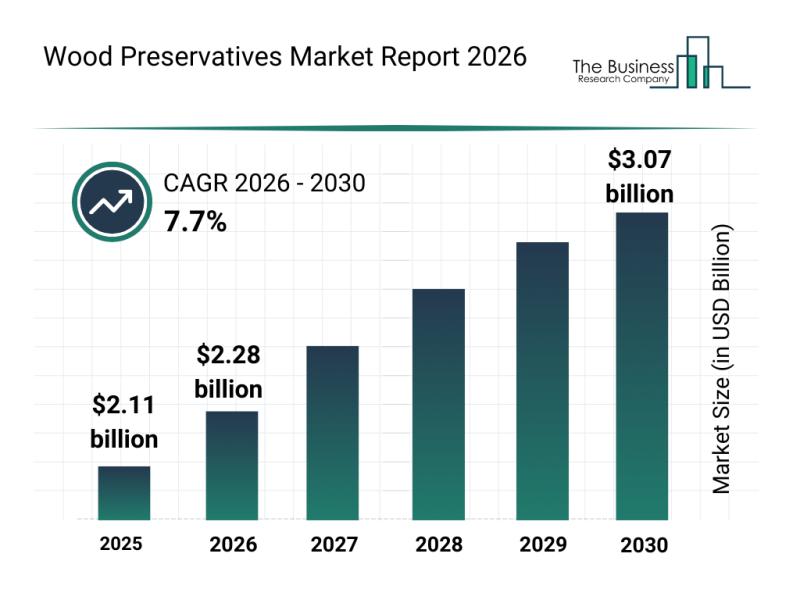
The wood preservatives market is on track for significant expansion over the coming years, driven by growing environmental concerns and evolving industry needs. As the demand for sustainable and effective wood protection increases, the industry is adapting with innovative products and strategic moves by key companies. Let’s explore the market’s size projections, major players, emerging trends, and important segments shaping this sector’s future.
Projected Growth and Market Value of the Wood Preservatives Market
The wood preservatives market is forecasted to grow substantially, reaching a value of $3.07 billion by 2030. This expansion corresponds to a compound annual growth rate (CAGR) of 7.7%. The upswing is largely fueled by the rising preference for sustainable building materials, increased use of water-based preservatives, and the ongoing expansion of infrastructure rehabilitation initiatives. Additionally, stricter regulations on hazardous chemicals and a heightened focus on prolonging the lifespan of treated wood are significant contributors to this growth. Key market trends expected to influence the sector during the forecast period include the wider adoption of environmentally friendly preservative formulations, increased demand for durable wood protection, broader use in construction and infrastructure, diversification of treated wood applications, and a stronger emphasis on meeting regulatory standards.
Leading Companies Influencing the Wood Preservatives Market
Several prominent companies dominate the wood preservatives industry, including BASF SE, Borax Inc., Buckman Laboratories International Inc., Cooper Care Wood Preservatives Inc., KMG Chemicals Inc., Koppers Inc., Kurt Obermeier GmbH & Co. KG, Lanxess AG, Lonza Group, Nisus Corporation, Osmose Inc., Quality Borate LLC, Remmers Gruppe AG, Troy Corporation, Arbolito SA, Chemonit SA, Dolphin Bay Chemicals Ltd., Draslovka Holding B.V., Jyoti Chemicals, Kop-Coat Inc., Rütgers Organics GmbH, and Safeguard Europe Ltd.
Strategic Moves Highlighting Market Consolidation
In April 2024, Koppers Holdings Inc., a US-based company specializing in treated wood products and wood treatment chemicals, completed the acquisition of nearly all assets of Brown Wood Preserving Company, Inc. for $100 million in cash. This purchase is aimed at strengthening Koppers’ wood preservation capabilities by incorporating Brown Wood’s pressure-treated wood utility pole manufacturing. It also serves to expand Koppers’ presence in both existing and new markets. Brown Wood Preserving Company is known for its expertise in protecting wood against decay, insect damage, and environmental challenges.
Innovations and Trends Shaping the Future of Wood Preservatives
One of the key trends in the wood preservatives market is the focus on developing advanced and eco-friendly products. Manufacturers are increasingly prioritizing natural or environmentally safer preservatives to comply with tighter regulations and minimize ecological impact. For instance, in March 2024, US-based chemical company Arxada introduced Tanasote S40, a copper-oil alternative to creosote. This wood preservative has gained approval in 23 European countries and supports sustainability goals through a published Life Cycle Analysis and ongoing Environmental Product Declaration (EPD) efforts. Tanasote offers a long service life of up to 40 years, low odor, and has been successfully tested in applications such as agricultural fencing, utility poles, and railway sleepers.
Detailed Breakdown of Market Segments Driving Growth
The wood preservatives market is segmented by formulation, application, and end user to better understand its dynamics:
1) Formulation Types: Water Based, Solvent Based, and Oil Based
2) Applications: Cabinets and Decks, Doors and Windows, Wood Flooring, Railroad Ties, and other uses
3) End Users: Residential, Commercial, and Industrial sectors
Further subcategories include:
– Within Water-Based formulations: Copper-Based Preservatives, Borate Preservatives, and Fungicides and Insecticides
– Within Solvent-Based formulations: Organic Solvent Preservatives, Synthetic Organic Biocide-Based Solvent Preservatives, and Insecticidal Solvent-Based Preservatives
– Within Oil-Based formulations: Creosote, Pentachlorophenol (PCP), and Linseed Oil-Based Preservatives
This detailed segmentation highlights the diverse approaches to wood preservation and the wide range of applications where these products play a critical role.